

Best Insoles for Walking: Daily Support, Stability, and Comfort

Most walking shoes come with a thin foam insert that is mostly there to fill space. It may feel fine for a quick errand, but during longer walks, travel days, city exploring, or daily step goals, that basic insert can compress quickly and leave your foot doing most of the work.
For a short walk, that may not matter. But if your feet start aching after 60 to 90 minutes of walking, the insole inside your shoe is one of the first things worth evaluating.
This guide breaks down what actually matters in walking insoles, including arch support, heel stability, cushioning, pressure distribution, shoe fit, and where custom-molded support like Contour Custom Pro fits in.
Why walking causes foot fatigue
Walking looks simple, but every step puts load through the heel, arch, midfoot, and forefoot. Over a long walk, that repeated loading adds up.
The plantar fascia is a thick band of tissue that runs along the bottom of the foot and helps support the arch. Mayo Clinic explains that plantar fasciitis can develop when tension and stress create small tears in this tissue, leading to irritation and inflammation. That does not mean every tired foot has plantar fasciitis, but it does show why arch support and pressure distribution matter during long periods of walking.
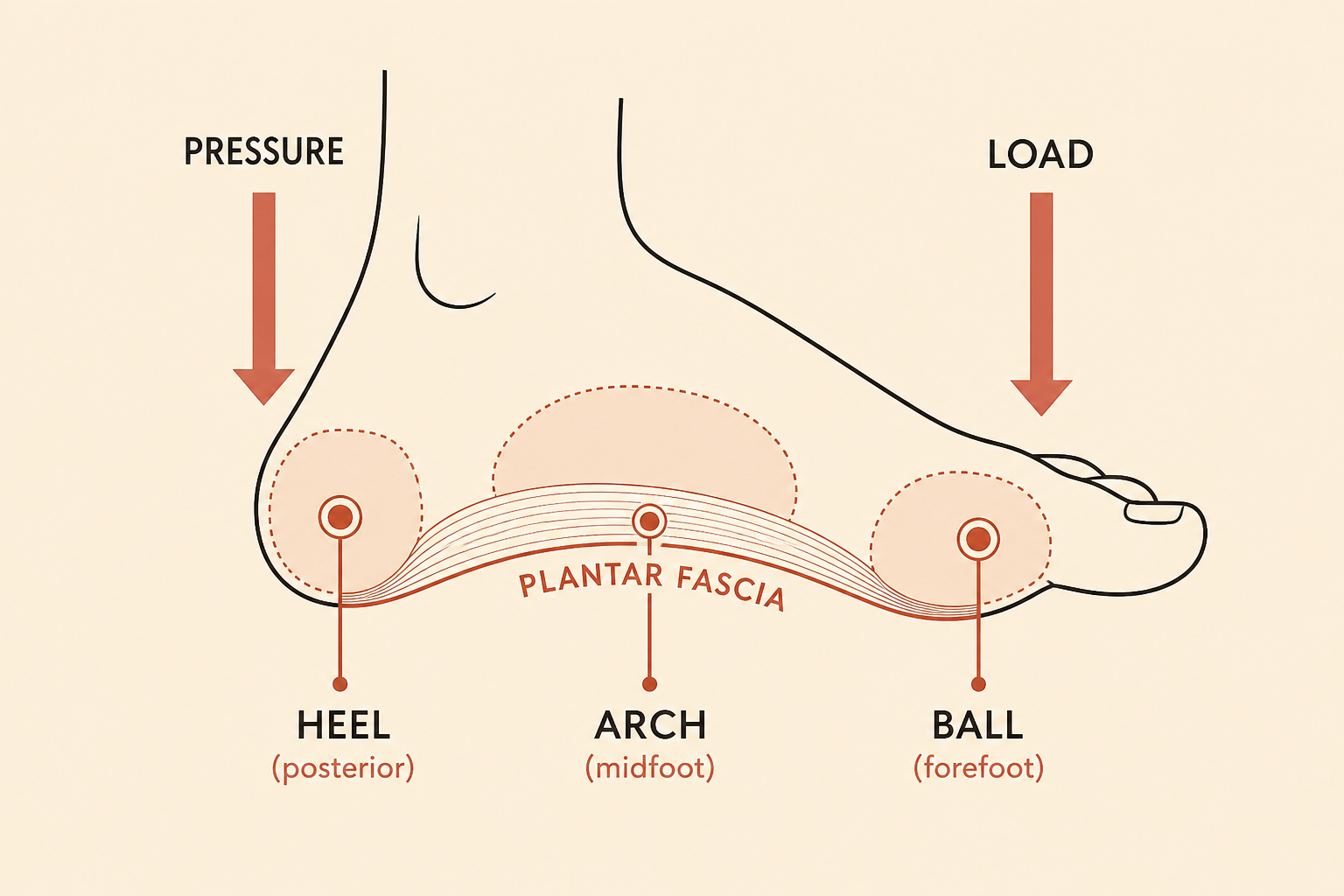
Foot fatigue during walking can come from several factors:
- Flat feet or high arches: Both can change how pressure moves through the foot.
- Hard surfaces: Concrete, tile, and city sidewalks offer very little give.
- Long duration: Stress builds over time, especially during travel days or long city walks.
- Unsupportive footwear: Thin factory inserts often add cushioning but very little structure.
If your feet feel fine at first but start aching later in the walk, it may be a sign that your current insoles are offering softness without enough support.
What walking insoles need to do
A walking insole that actually supports your foot needs to do more than feel soft when you first put it on. The best walking insoles usually balance four things: arch support, heel stability, cushioning, and shoe fit.
1. Support the arch
The arch is where many people begin to feel fatigue during longer walks. An insole that makes real contact with the arch can help distribute pressure across more of the foot instead of leaving the heel and forefoot to take most of the load.
Firm arch support may help reduce unnecessary strain through the arch and heel for some people, especially during long walks or daily movement.
2. Stabilize the heel
A defined heel cup helps the back of the foot sit more securely inside the shoe. This can make the whole insole feel more stable and reduce unnecessary side-to-side movement during walking.
3. Balance cushioning with structure
Cushioning helps soften impact. Structure helps support the foot. Walking insoles need both, but the balance matters.
An insole that is all cushioning may compress quickly. An insole that is all structure with no comfort layer may feel too harsh. The goal is a firm base for support with enough top-layer comfort for daily walking.
4. Fit the shoe
An insole that bunches, folds, crowds the toe box, or raises your foot too high inside the shoe can create new discomfort. A good walking insole should fit flat inside the shoe and work with the footwear you actually use.
Arch support vs. cushioning
This is the biggest buying mistake people make with walking insoles. Soft gel and foam can feel great for the first few steps, but cushioning works by compressing. Once it compresses under body weight, it may not give your foot enough structure for longer walks.
Arch support works differently. A firmer structure under the arch helps create contact with the midfoot and can help distribute pressure more evenly. This matters because walking discomfort often builds over time, not just during the first few minutes.
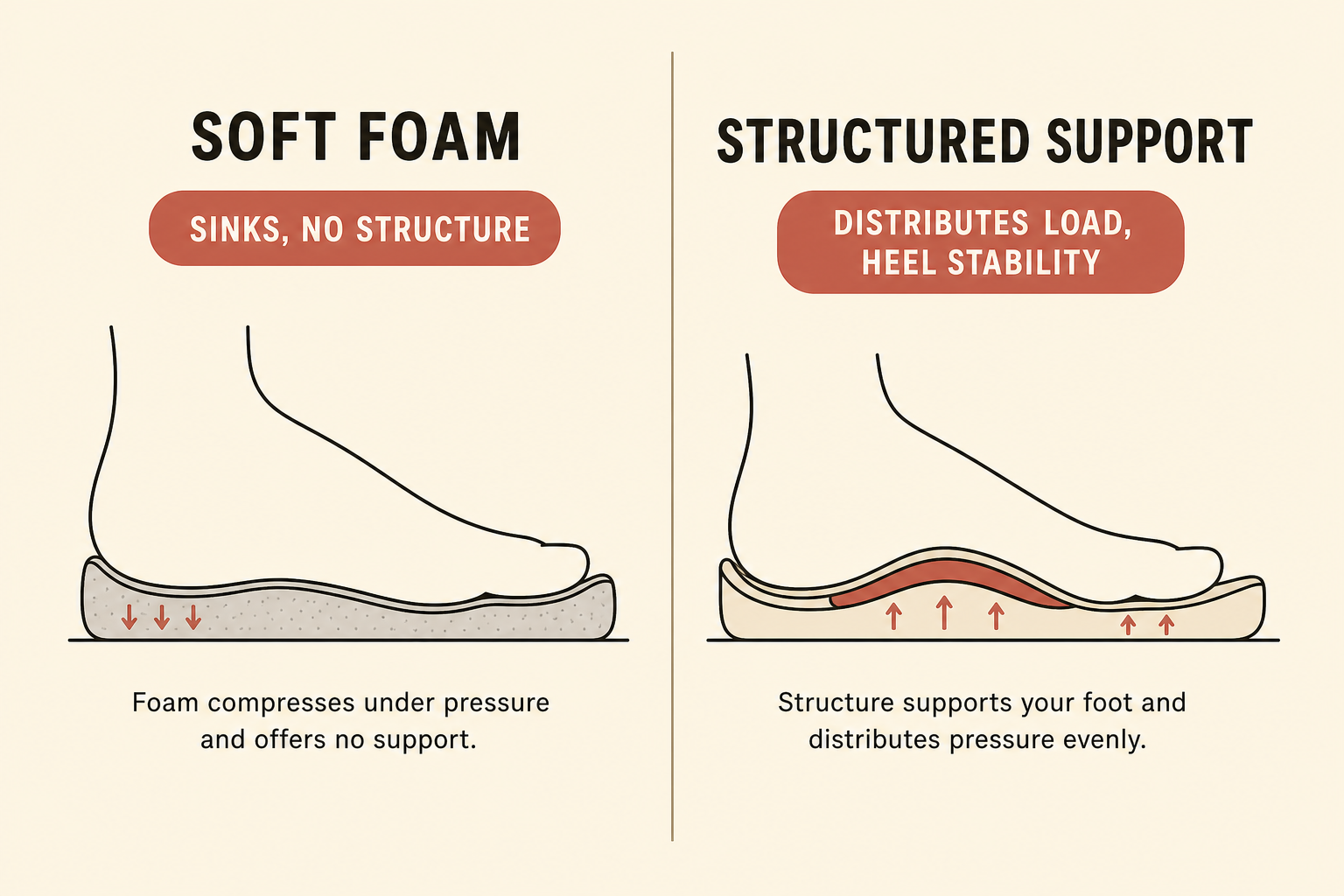
The practical test is simple: if your shoes feel comfortable for the first 20 minutes but your feet feel tired after an hour, your insoles may be cushioning your feet without supporting them enough.
For people with flat feet, this distinction becomes even more important. A foot that rolls inward under load may need more support than soft foam can provide. Our guide to the best insoles for flat feet goes deeper on that specific foot type.
Heel stability and pressure distribution
The heel is usually the first part of the foot to contact the ground during walking. If the heel feels unstable or the fat pad under the heel spreads too much, walking can feel less comfortable over time.
A defined heel cup helps keep the heel centered inside the shoe. This can make the insole feel more stable and can help support the foot as it moves through each step.
Pressure distribution matters too. A supportive insole helps spread load across the heel, arch, and forefoot instead of allowing pressure to concentrate in isolated spots.
If your feet roll inward while walking, see our overpronation insoles guide. If you feel more pressure on the outside edge of your foot, see our supination insoles guide.
Best support types for daily walking
Different walking situations place different demands on your feet. The right insole depends on where you walk, how long you walk, and what kind of shoes you wear.
Everyday errands and city walking
For errands, commuting, and city walking, you need an insole that stays supportive from the first stop to the last one. Look for firm arch contact, a stable heel cup, and a top layer that does not compress too quickly.
Travel walking
Travel days often involve airports, long lines, city streets, museums, parks, and standing around between activities. Shoe compatibility matters here because you may be wearing one pair of shoes for many hours.
If your walking shoe has a removable factory insert, a structured replacement insole usually fits better than stacking a new insole on top of the old one.
Increasing your step count
If you are trying to walk more for fitness, general health, or recovery, your feet are adapting to more repeated load. Better arch and heel support can make that transition more comfortable for some people.
For a related use case, read our guide to the best insoles for standing all day.
Walking with recurring foot discomfort
If you are dealing with recurring arch or heel discomfort, flat feet, high arches, or a foot rolling pattern, generic cushioning may not be enough. You may need a more structured support surface that fits your foot more closely.
For heel pain and plantar fasciitis-related discomfort, see our guide to the best insoles for plantar fasciitis.
Shoe fit and removable factory insoles
Before buying walking insoles, check whether your shoe has a removable factory insert. Most athletic shoes and many walking shoes do.
Pull the existing insole out. If it comes out cleanly, your shoe is likely designed to accept a replacement insole. The factory insert is usually thin foam and may not offer much structure.
When replacing it, the new insole should:
- Sit flat inside the shoe
- Avoid bunching at the toe or heel
- Avoid raising the heel too high
- Leave enough room in the toe box
- Feel stable during walking
If your shoes are tight or low-volume, you may need a lower-profile option. If your shoes have enough depth, a full-length structured insole may be more comfortable.
Where Contour fits in
For walkers who want more than generic foam cushioning, Contour Custom Pro is designed as an at-home custom-molded option that forms inside the shoes you actually wear.
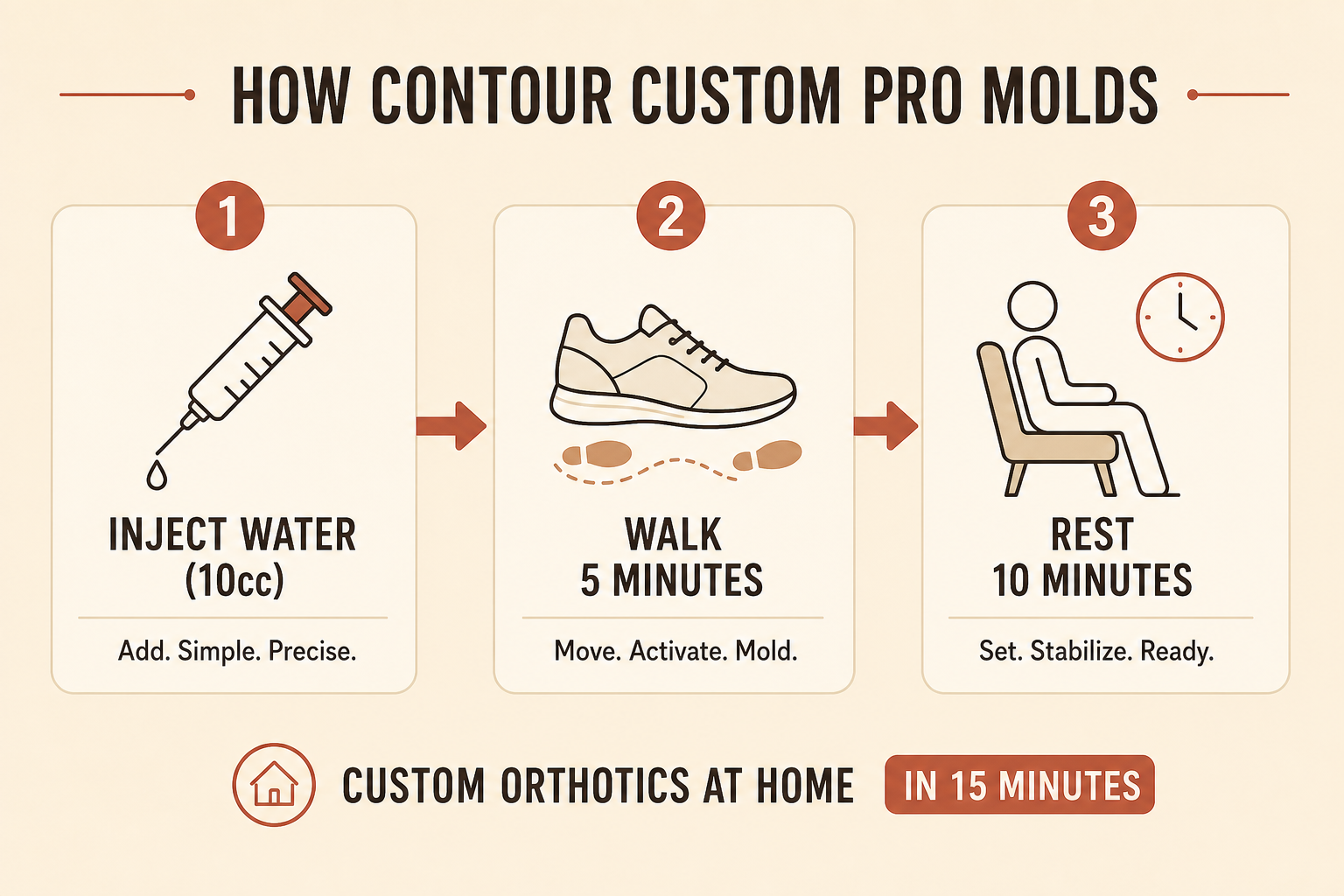
The process uses HydroFit water-activated molding. You inject water, place the insole inside your shoe, walk while the support surface molds under body weight, then let it set into a firmer custom-molded shape.
Contour helps address a few problems that generic insoles often cannot:
- Arch gaps: A custom-molded insole can help reduce gaps between the foot and the support surface.
- Shoe-specific fit: Because the molding happens inside your shoe, the insole forms around the footwear you actually use.
- Firm structure: Contour uses a fiberglass-resin core designed to hold shape under body weight.
- Daily wear: The live product page describes Contour as built for 2+ years of daily wear.
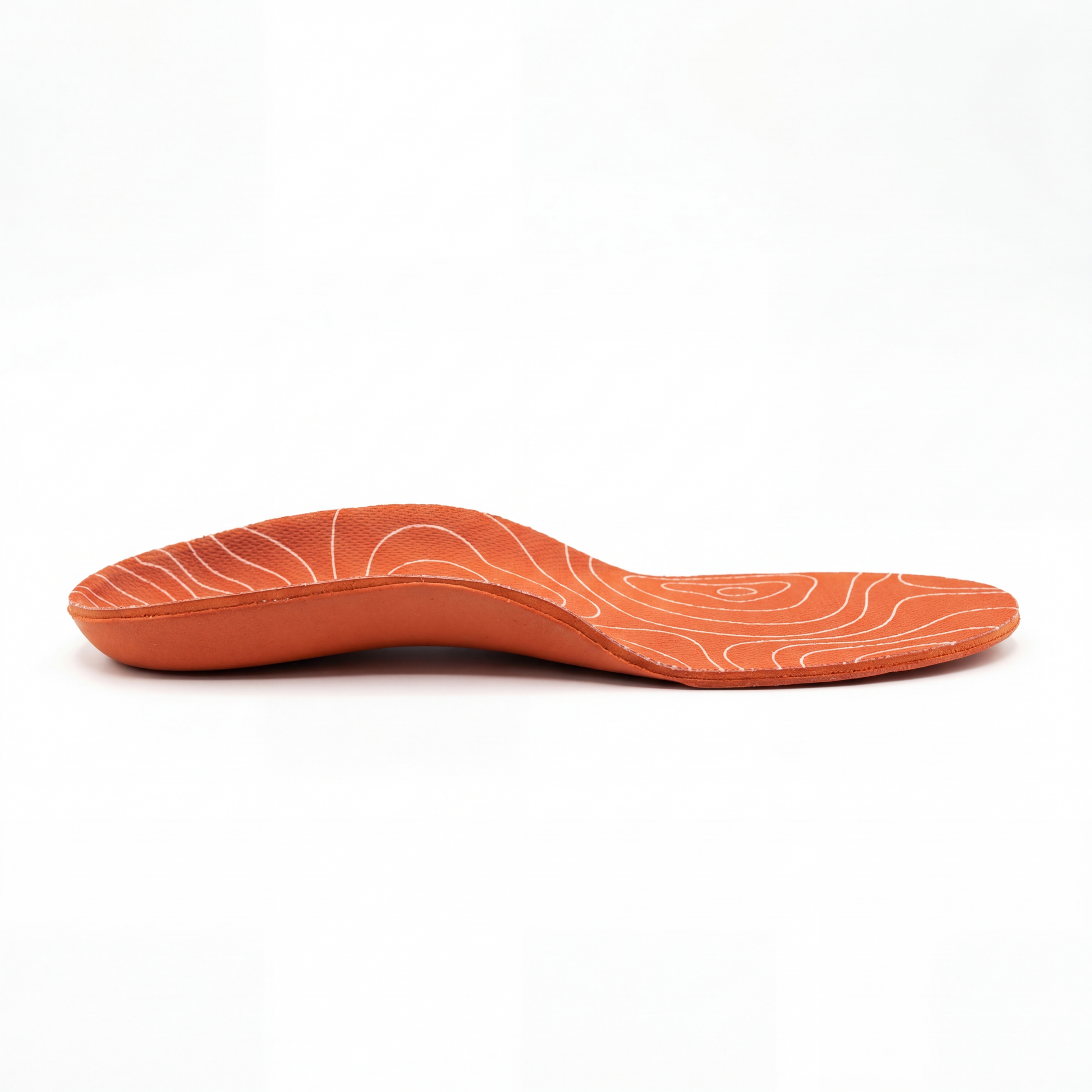
Contour is designed for people who want more support than a soft, generic insert and want a custom fit without a clinic appointment. It may be useful for people dealing with recurring arch or heel discomfort, foot fatigue from extended walking, or early signs of overpronation.
When to see a podiatrist
Walking insoles can help with everyday foot fatigue, arch discomfort, and mild support needs. They are not a substitute for professional medical care when symptoms are severe or persistent.
See a podiatrist or healthcare professional if:
- Pain is severe, sudden, or debilitating: Acute heel or arch pain that changes how you walk should be evaluated.
- Pain lasts for several weeks: If symptoms do not improve with rest, footwear changes, or support, get professional guidance.
- You notice changes in how you walk: Limping, favoring one foot, or shifting your gait can create compensation patterns.
- Pain spreads beyond the foot: Foot-related discomfort can sometimes affect the ankle, knee, hip, or lower back.
- You have underlying conditions: Diabetes, neuropathy, arthritis, ulcers, or recent surgery require professional guidance before changing support.
This article is for educational purposes only and is not a substitute for medical advice, diagnosis, or treatment.
Try Contour Insoles
Contour Custom Pro is designed for walkers who want structural support that fits their foot rather than an off-the-shelf shape that approximates it. The water-activated molding process takes about 15 minutes and happens inside the shoes you already own.
If you are experiencing foot fatigue from daily walking, increasing your step count, travel days, or recurring arch and heel discomfort, Contour may be a practical option before stepping up to a traditional clinic-made orthotic.
Ready to try custom-molded support?
Contour Custom Pro molds inside your own shoe in about 15 minutes, helping create a firmer, more personalized support surface for walking, travel, and everyday movement.
Frequently Asked Questions
What are the best insoles for walking?
The best walking insoles usually combine arch support, heel stability, cushioning, and a secure shoe fit. The right choice depends on your foot shape, walking distance, shoes, and whether you need more cushioning or more structure.
Are soft insoles good for walking?
Soft insoles can improve step-in comfort, but they may compress during longer walks. For daily walking or travel, firmer arch support can be more helpful because it is designed to hold shape under repeated loading.
Do walking insoles help with plantar fasciitis?
Insoles do not cure plantar fasciitis, but arch support may help distribute pressure and reduce strain for some people with plantar fasciitis-related discomfort. If heel pain is severe or persistent, speak with a medical professional.
Should I remove the factory insole before adding walking insoles?
Usually, yes. If your shoe has a removable factory insert, it is usually better to replace it instead of stacking a new insole on top. Stacking insoles can crowd the shoe and create discomfort.
Can I use the same walking insoles in different shoes?
Sometimes, but fit can vary by shoe. A walking insole should sit flat, avoid bunching, and leave enough room in the toe box. If the insole changes how the shoe fits too much, it may not be the right match.
When should I see a podiatrist for walking-related foot pain?
See a podiatrist if foot pain is severe, worsening, persistent, changes how you walk, spreads up the body, or occurs with diabetes, neuropathy, ulcers, swelling, numbness, or recent surgery.