

How to Break In Orthotics and Insoles Without Giving Up Too Soon

You finally committed to trying custom orthotics. You put them in, took a few steps, and immediately thought: this feels different. Maybe the arch felt higher than expected. Maybe your calves felt tired by lunchtime. Maybe you wondered if the insoles were the wrong fit.
That early adjustment period is common with firmer support. It does not always mean something is wrong. But it also does not mean you should push through sharp pain or ignore warning signs.
The key is knowing the difference between your body adapting to a new support surface and a genuine sign that the fit, shoe, or wear schedule needs attention. This guide explains how to break in custom orthotics and supportive insoles gradually, what discomfort may be normal, what is not normal, and when to contact support or a podiatrist.
Why new insoles can feel strange at first
Generic foam insoles usually do very little structurally. They add cushion, but they do not significantly change how your foot contacts the shoe or how the arch is supported.
A custom-molded orthotic, or any firmer supportive insole, is different. It introduces a new contact surface under the arch, a more structured heel cup, and a firmer foundation inside the shoe. That can feel unfamiliar at first, especially if your feet have spent years wearing soft factory liners or unsupported shoes.
When you add structured support, your muscles, tendons, calves, Achilles, and plantar fascia may need time to adapt. The first few days should feel like a gradual transition, not a test of pain tolerance.
The firmer the support, the more noticeable that transition can be. Soft foam may feel easier at first because it is not asking the foot to interact with much structure. A firm custom-molded support surface is more noticeable because it is designed to do more than cushion.
What the break-in period actually means
The break-in period is not really about the insole “softening up.” With firm or custom-molded support, the insole is already doing what it is designed to do. The adjustment is mostly happening in your body.
Your feet are getting used to a different support surface. Your arch may be contacting the insole more than it did before. Your heel may sit in the shoe differently. Your calves and ankles may feel like they are working in a new way.
That is why gradual wear matters. Instead of wearing new orthotics for a full workday immediately, it is usually better to build up slowly and let your body adapt.
If you are comparing custom orthotics vs. standard insoles, the break-in experience can feel different. Custom-fit support often has a more noticeable adjustment phase because it provides more structure than basic foam.
Suggested wear schedule
There is no perfect schedule for every foot, shoe, or activity level. But the basic principle is simple: start short, increase gradually, and pay attention to how your body responds.
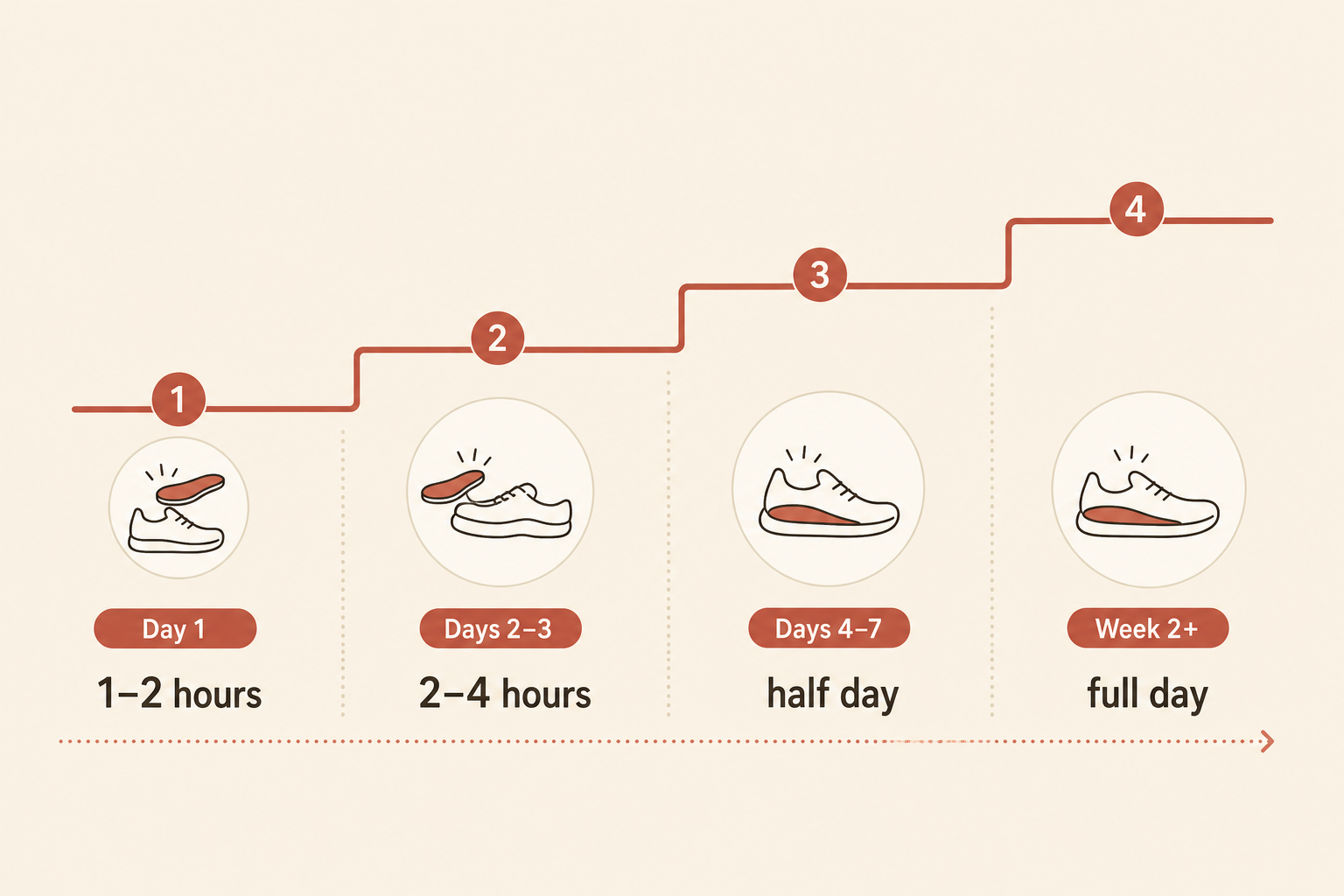
General break-in schedule
| Period | Suggested wear time |
|---|---|
| Day 1 | 1–2 hours |
| Days 2–3 | 2–4 hours |
| Days 4–7 | Half day, if comfortable |
| Week 2 | Increase toward full-day wear as tolerated |
This is general guidance, not a prescription. Your body matters more than the calendar.
- Stop immediately if you feel sharp pain, numbness, tingling, or pain that gets worse day after day.
- If discomfort increases after adding more wear time, go back to the previous step for a day or two.
- Start with lower-activity wear before using new insoles for running, hiking, long shifts, or extended standing.
- Do not force full-day wear just because the product is custom-molded.
If you are dealing with plantar fasciitis-related discomfort or you stand all day for work, the adjustment may feel more noticeable because your feet may already be under extra strain.
What discomfort may be normal
Some sensations can be normal during the first few days of firmer support. The important pattern is that normal break-in discomfort should be mild, manageable, and improving over time.
Arch awareness or arch fatigue
You may notice the arch support more than expected. That does not automatically mean the arch is too high. It may simply be the first time your arch has had firm contact from a support surface.
Calf or lower-leg soreness
Firmer support can slightly change how the heel and foot sit inside the shoe. That may make the calf, Achilles, or lower leg feel worked during the early adjustment period.
Unfamiliar pressure
A custom-molded insole contacts the foot differently than soft foam. You may feel the heel cup, arch support, or edges of the support more clearly at first. That awareness often fades as your body adapts.
General foot tiredness
Your feet may feel like they are doing something new. Mild tiredness can be normal as long as it improves with rest and does not become sharp, localized, or worsening pain.
The consistent pattern of normal discomfort: it is mild, diffuse, and gradually decreasing.
What is not normal
Not every sensation should be treated as part of the break-in period. Some signs mean you should stop using the insoles and reassess the fit, shoe, or your symptoms.
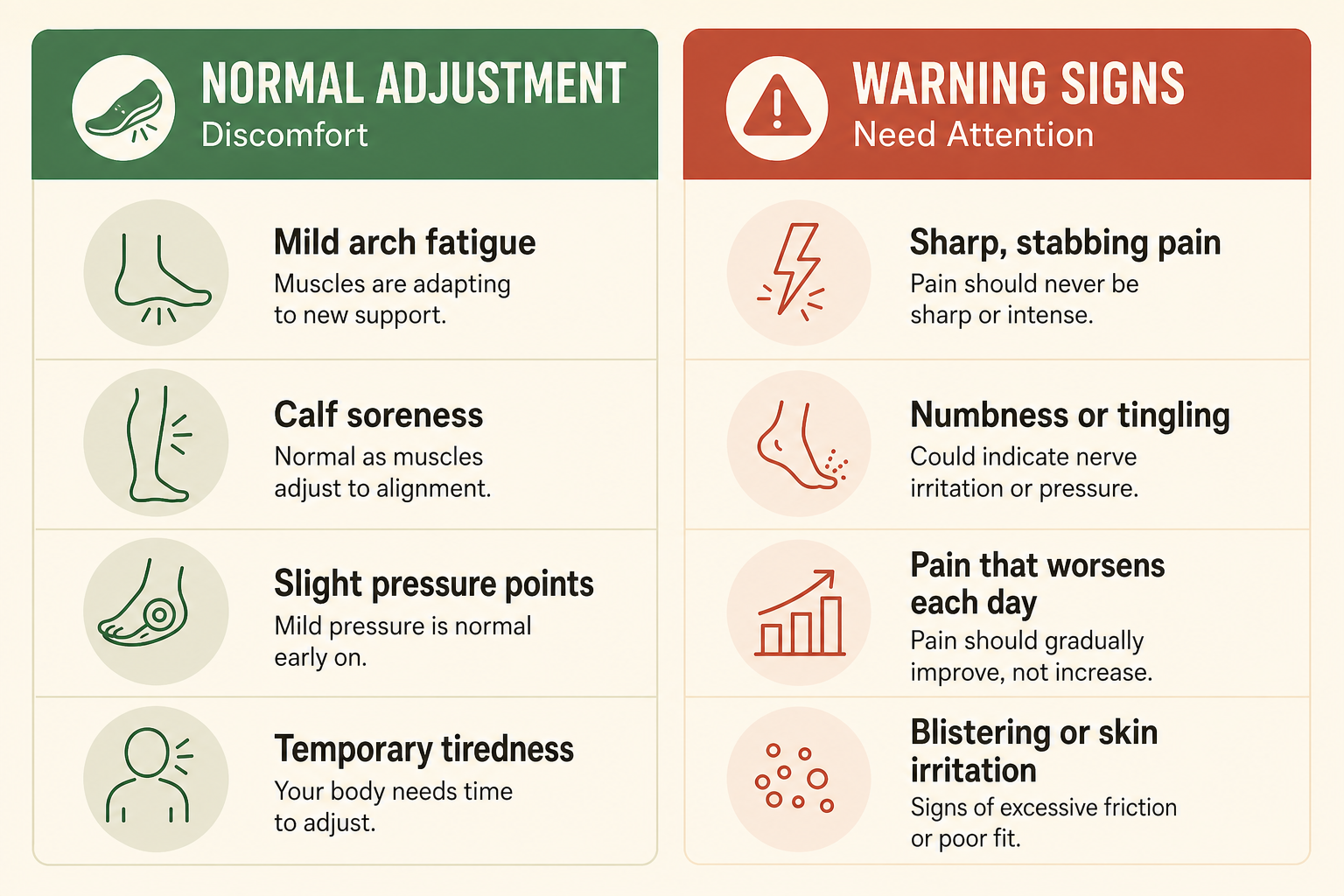
Sharp or stabbing pain
Break-in soreness should not feel sharp, stabbing, or sudden. If you feel sharp pain in the heel, arch, ball of the foot, or toes, remove the insoles.
Numbness or tingling
Numbness or tingling may suggest the insole or shoe is creating pressure in the wrong place. Do not push through nerve-like symptoms.
Pain that worsens day after day
Normal adjustment should slowly improve. If each day feels worse than the last, reduce wear time or stop using the insoles until you can troubleshoot.
Blisters or skin irritation
Blisters, hot spots, or skin irritation usually mean friction, placement, or shoe fit needs attention. These issues usually do not resolve by simply wearing the insoles longer.
New knee, hip, or lower-back pain
Because orthotics can change how your foot sits inside the shoe, new discomfort higher up the body is worth paying attention to. If it persists, stop and speak with a medical professional.
How to troubleshoot shoes, socks, placement, and fit
If something feels off, check the basics before assuming the insoles are wrong for you.
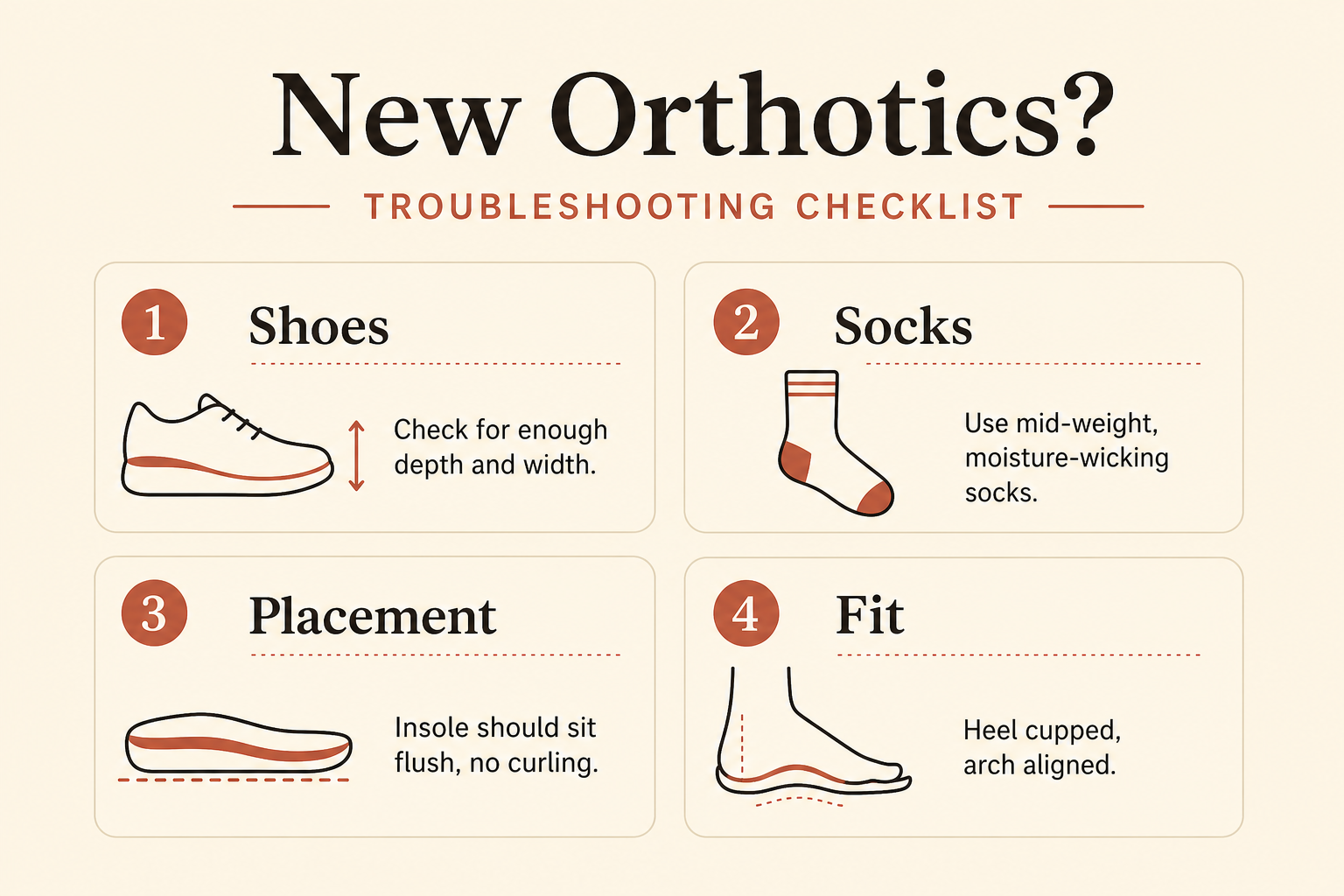
Shoes
Not every shoe has enough internal space for a firm orthotic. If your shoe already fits tightly, adding a structured insole may crowd the toes or press against the top of the foot. Try the insoles in a shoe with more depth first.
Socks
Socks affect how the insole contacts your foot. A mid-weight, moisture-wicking sock may help reduce friction during the first week.
Placement
The insole should sit flat inside the shoe. Your heel should sit fully inside the heel cup, not on the edge of it. If the insole shifts, curls, or bunches, the size or shoe fit may need adjustment.
Arch position
The arch support should meet your arch, not feel like it is pressing too far forward or too far back. If the arch feels misplaced, remove the insole and reset it in the shoe.
Factory insoles
Many shoes include a removable factory insert. In most cases, remove that factory insole before placing a custom or structured insole inside. Stacking insoles can create too much volume and cause discomfort.
Contour’s wear-in philosophy
Contour Custom Pro is a custom-molded orthotic that uses water-activated HydroFit technology to set a firm support surface inside your own shoe.
Because Contour molds under body weight while you walk, the support surface is shaped around how your foot loads inside your actual shoe. That can help reduce the guesswork of generic arch shapes.
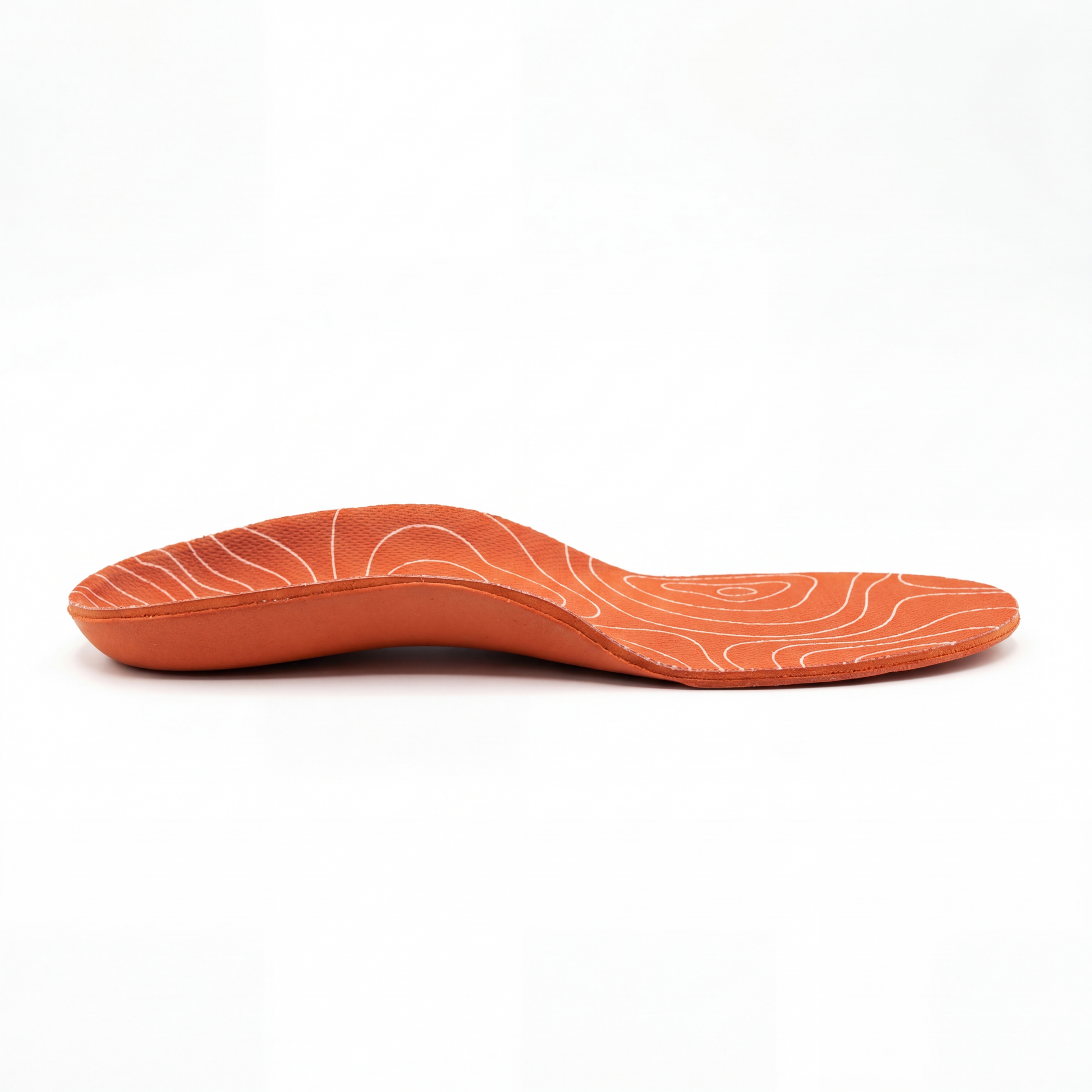
But custom-molded does not always mean instantly familiar. Firm support can feel different at first, especially if you are used to soft foam. The first couple of weeks should be treated as a transition period.
Contour’s product page describes Weeks 1–2 as “The Adjustment” because structural support can feel firm at first. That firmness is part of the support system, but your body still needs time to adapt.
When to contact support or a podiatrist
Some issues are product-fit questions. Others are medical questions. It is important to know the difference.
Contact Contour support if you have questions about:
- Placement inside the shoe
- Whether to remove the factory insole
- Fit issues after molding
- Whether the insole is sitting correctly
- Questions about the 60-day wear-in period
Contact a podiatrist or medical professional if you experience:
- Sharp pain
- Numbness or tingling
- Pain that gets worse over two or more weeks
- Blistering or skin breakdown
- New knee, hip, or lower-back pain that persists
- Diabetes, neuropathy, ulcers, or circulation issues
- Recent foot or ankle surgery
This article is for educational purposes only and is not a substitute for medical advice, diagnosis, or treatment.
Try Contour Custom Pro
If you are looking for a firmer, custom-molded insole that adapts to your actual foot rather than a standard arch template, Contour Custom Pro is designed to create personalized support inside your own shoe.
The water-activated molding process takes about 15 minutes and shapes under body weight. Give the product a real break-in period, pay attention to how your body responds, and reach out if the fit does not feel right.
Ready to try custom-molded support?
Contour Custom Pro molds inside your own shoe in about 15 minutes, helping create a firmer, more personalized support surface for everyday movement.
Frequently Asked Questions
How long does it take to break in custom orthotics?
Many people need one to two weeks to adjust to firmer support, though some may need longer. Start with short wear periods and gradually increase as tolerated.
Should new orthotics hurt at first?
New orthotics may feel different, and mild arch awareness or foot tiredness can happen. Sharp pain, numbness, tingling, blistering, or worsening pain is not something to push through.
Can I wear new orthotics all day right away?
It is usually better to start with one to two hours and build gradually. Wearing firm support all day immediately can make the adjustment period harder.
Should I remove the factory insole before using orthotics?
In most shoes, yes. If the factory insole is removable, take it out before adding a custom or structured insole. Stacking insoles can crowd the shoe and create new pressure points.
What should I do if my orthotics feel too firm?
Reduce wear time, check shoe fit, make sure the insole is sitting flat, and use socks that reduce friction. If firmness turns into sharp pain or worsening symptoms, stop and seek guidance.
When should I contact support?
Contact support if you are unsure about placement, fit, molding, shoe compatibility, or whether the insole is sitting correctly. Contact a podiatrist for severe, worsening, nerve-like, or medical symptoms.