

Best insoles for standing all day in 2026: Why support beats cushioning

If you stand all day, soft insoles can feel good at first but may not give your feet the structure they need through a full shift. The real difference usually comes down to support that holds its shape under body weight.
Long shifts on concrete, retail floors, hospital floors, warehouses, salons, restaurants, and job sites can put constant load through the feet. When your arches, heels, and forefoot have to absorb that pressure for hours at a time, cushioning alone may not be enough.
This guide breaks down what to look for in insoles for standing all day, including arch support, heel stability, pressure distribution, shoe fit, and where custom-molded support like Contour Custom Pro fits in.
Why standing all day causes foot fatigue
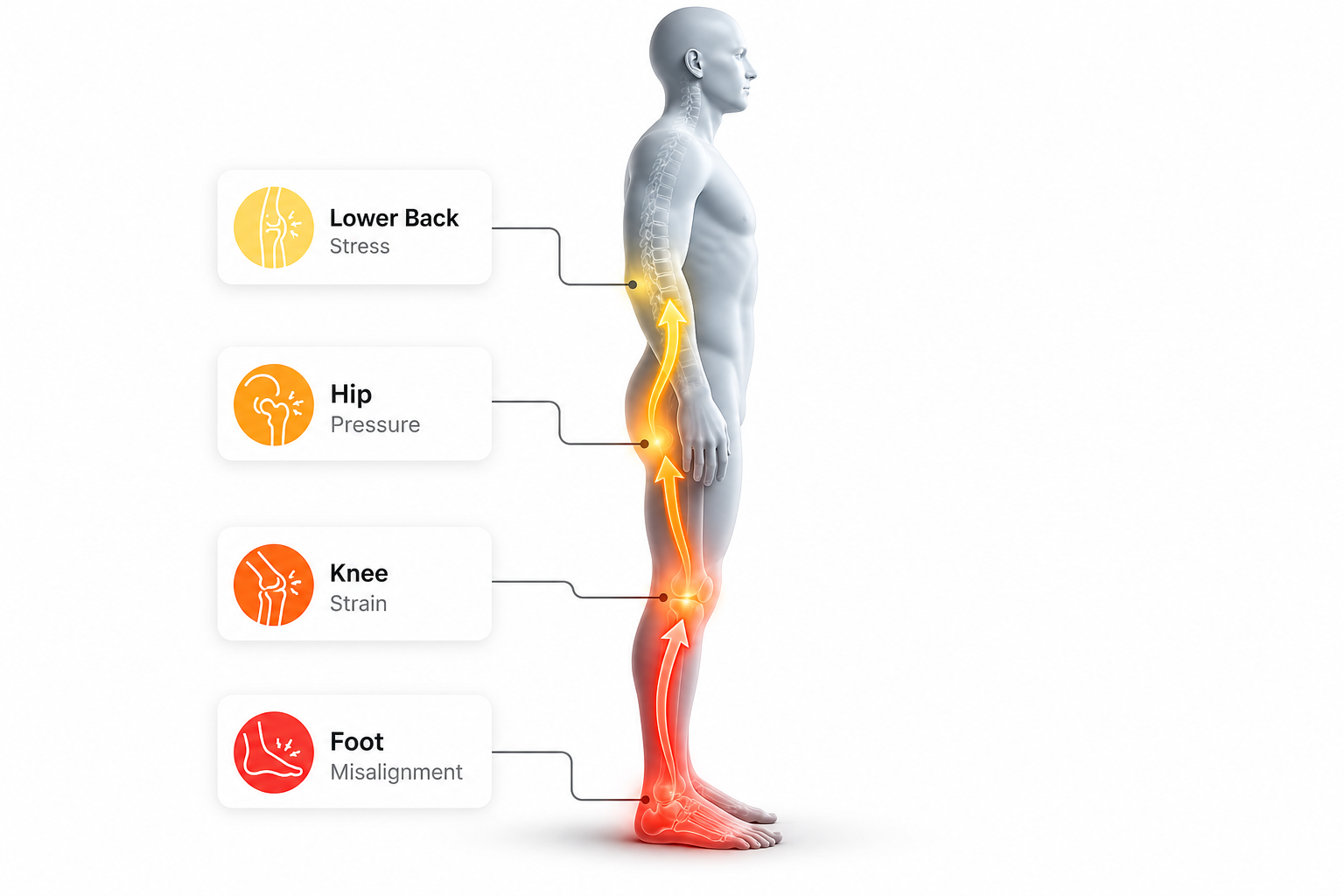
When you stand, your feet act as the foundation for the rest of your body. If that foundation feels unstable or unsupported, the strain can show up in the arches, heels, ball of the foot, knees, hips, or lower back.
Your feet are built to adapt to movement. The arch helps absorb and distribute force as you walk. But many modern work environments require standing for hours on flat, hard surfaces with very little give. Over time, that repeated loading can make the feet feel tired, sore, or unsupported.
Standing all day can also aggravate existing foot issues. For example, Mayo Clinic notes that plantar fasciitis is commonly managed with conservative care such as stretching, supportive shoes, and arch supports that help distribute pressure more evenly across the feet.
If heel pain is part of what you are dealing with, you may also want to read our guide to the best insoles for plantar fasciitis.
Cushioning vs. support: why soft insoles often fail on concrete
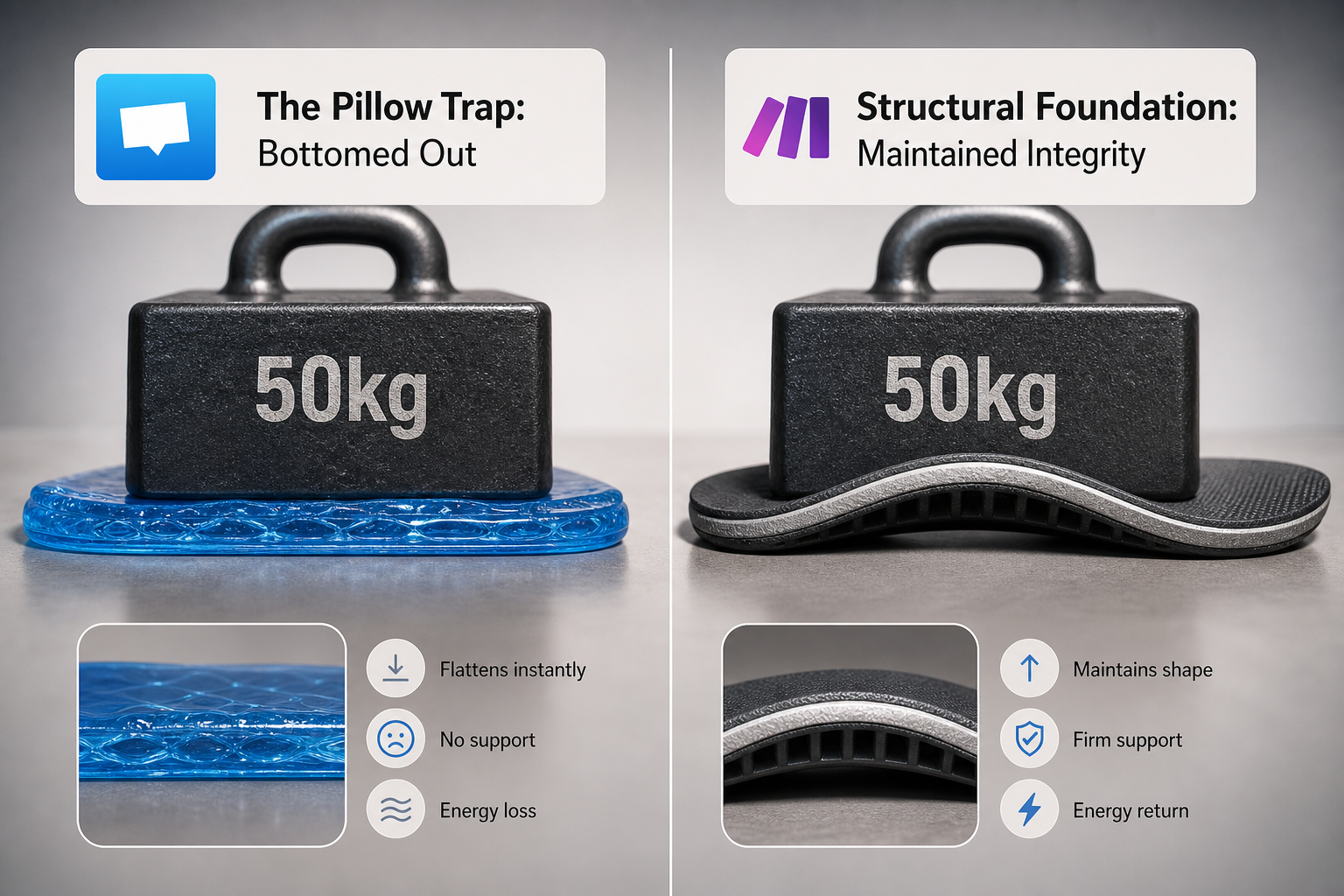
There is a common misconception that comfort always means softness. Memory foam and gel inserts can feel comfortable when you first put them on, but soft materials can compress during a long shift.
Once soft foam compresses, it may stop supporting the arch and heel the way it did at the beginning of the day. This is why some insoles feel great during the first hour but do not feel supportive by the end of a shift.
Structural support works differently. A firmer insole is designed to help the foot maintain a more stable foundation under body weight. Instead of simply adding cushion, it supports the arch, helps the heel sit more securely, and may help distribute pressure more evenly.
That does not mean the best insole should feel painfully hard. It means the support structure should hold its shape instead of flattening out when you stand on it.
What to look for in insoles for standing all day
Choosing the right pair of insoles means looking past basic comfort claims and focusing on what your feet need during a full day on hard surfaces.
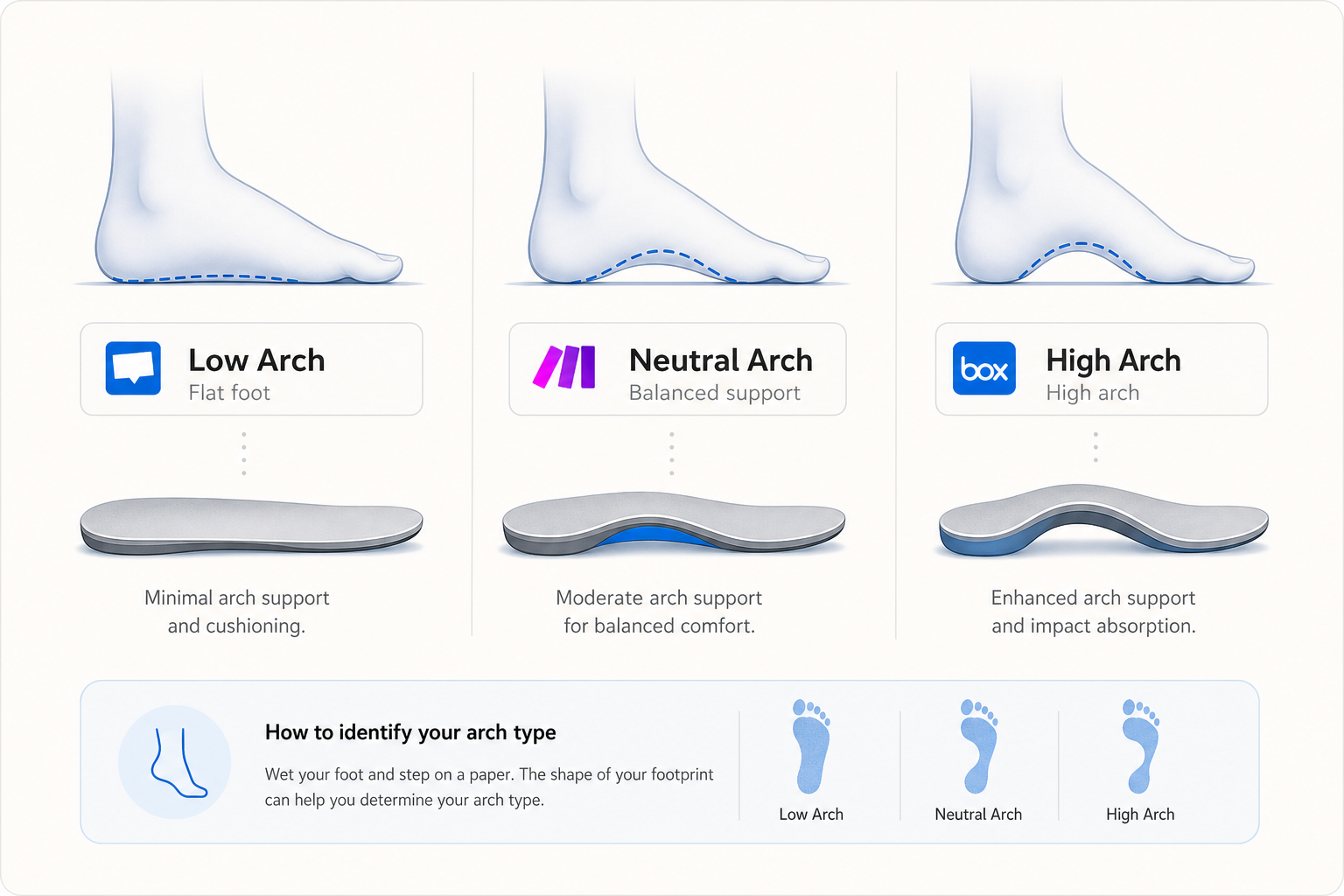
Arch support that matches your foot
Not every foot needs the same arch height. A high-arch insole can feel intrusive for someone with flat feet, while a low-arch insole may not contact the arch enough for someone with higher arches.
The goal is support that matches your foot shape. If you are unsure about your arch type, read our guide to the best insoles for flat feet.
Stable heel cup
A stable heel cup helps the back of the foot sit more securely inside the shoe. This can improve how the arch support feels and may reduce unnecessary side-to-side movement during long periods of standing and walking.
Support retention
Many low-cost insoles use soft foam that can compress over time. If you stand all day, you want materials that are designed to hold their shape under repeated loading.
Look for firmer materials, semi-rigid shells, cork-based support, resin structures, or custom-molded systems that do more than add temporary cushion.
Volume and shoe fit
An insole that is too thick can crowd your toes or make your shoes feel tight. Higher-volume insoles may work well in work boots, while sneakers and dress shoes often need a lower-profile option.
If possible, choose shoes with removable factory liners so the supportive insole can replace the original insert instead of sitting on top of it.
Common support options and how they compare
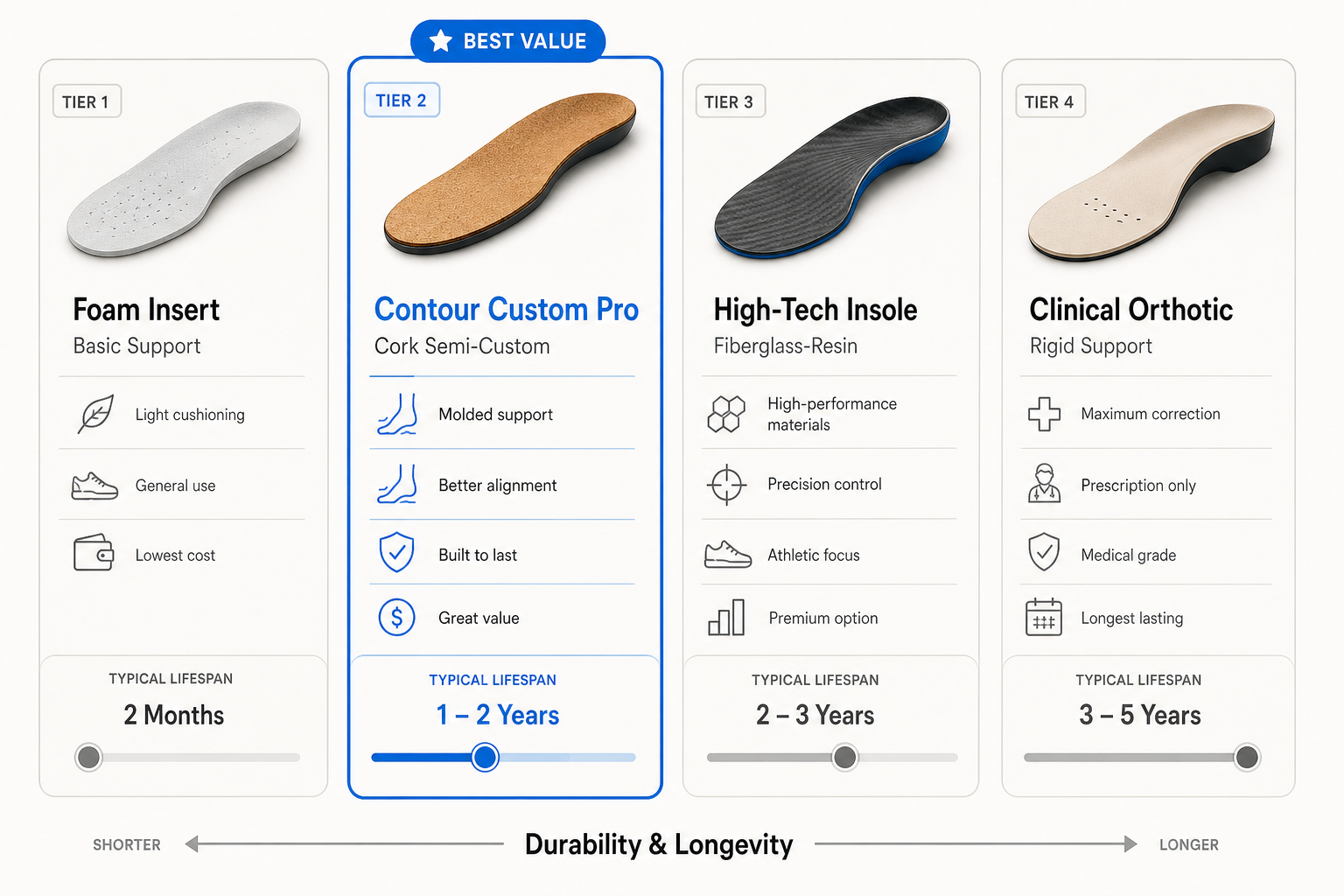
The market for foot support includes several different categories. The right choice depends on your budget, shoes, activity level, and how much personalization you need.
Retail inserts are usually the easiest to find and the most affordable. They can help with basic comfort, but many are built around generic shapes and softer materials.
Semi-custom or heat-moldable insoles can offer more structure and a better fit than basic retail inserts. They may be a good option if you want something more supportive but do not need a fully custom-molded process.
Traditional clinical orthotics are made through a podiatrist or medical professional. They may be the right choice for complex medical issues, severe symptoms, or cases that require professional evaluation.
At-home custom-molded insoles sit between those options. They are designed to create a more personalized fit at home without the traditional clinic and lab process.
For a deeper breakdown, read our guide to custom orthotics vs. insoles.
Comparison of standing support types
| Type | Support Style | Customization | Typical Use | Price Range |
|---|---|---|---|---|
| Retail Inserts | Cushioning or basic support | Generic or trim-to-fit | Mild fatigue and short-term comfort | $20–$40 |
| Semi-Custom | Firmer arch support | Heat-moldable or arch-profile match | More structure than basic foam | $50–$90 |
| Contour Custom Pro | Firm custom-molded support | Water-activated molding inside your shoe | Personalized support for daily wear | $150 |
| Clinical Orthotics | Clinician-guided custom support | Cast, scan, or lab process | Complex cases or medical oversight | $400–$600+ |
Where Contour fits in for long shifts
Contour Custom Pro was designed to bridge the gap between generic store-bought inserts and traditional clinic-made orthotics.
The core of the product is the HydroFit water-activated molding process. Instead of using a generic arch shape, Contour molds inside your own shoe under body weight. This creates a personalized support surface based on the shoes you actually wear and the way your foot loads during movement.
- Inject water: Use the provided syringe to add water into the insole.
- Walk to mold: Place the insoles in your shoes and walk so the support surface can shape under body weight.
- Let it set: Sit while the material finishes setting into a firmer custom-molded shape.
The result is a firm custom-molded support surface designed to hold its shape over time. Unlike soft foam that can compress with wear, Contour’s resin core is built for long-term structural support.
Contour is not a medical treatment and does not replace professional care in complex cases. But for people who want more personalization than generic foam inserts, it can be a practical option for long shifts, daily standing, and everyday movement.
Other support options people compare
If you are not ready for a custom-molded option, there are several over-the-counter brands people commonly compare for standing all day. Keep in mind that product details and pricing can change, so verify current information before purchasing.
Superfeet
Superfeet offers several structured insole options, including work-focused and all-purpose support models. These can be useful for people who want a firmer pre-shaped support without custom molding.
PowerStep
PowerStep is a well-known insole brand with options that combine cushioning and a pre-shaped support shell. These may be helpful for people who want more support than basic foam but do not need a custom-molded process.
Aetrex
Aetrex offers orthotic insoles and foot-scanning technology. Their products may be a good comparison point for shoppers looking at comfort, support, and fit guidance.
When to see a podiatrist for foot pain
Insoles can be helpful for many people, but they are not a replacement for medical care. You should speak with a podiatrist or healthcare professional if you experience:
- Severe or worsening pain
- Pain that prevents you from walking normally
- Sudden swelling, bruising, or visible deformity
- Numbness, tingling, burning, or loss of sensation
- Diabetes, neuropathy, ulcers, or open wounds
- Recent foot or ankle surgery
- Pain that does not improve with conservative care
This article is for educational purposes only and is not a substitute for medical advice, diagnosis, or treatment.
Support that lasts past the first hour
The key to getting through long shifts is not always more cushioning. It is support that matches your foot, fits your shoe, and holds its shape under repeated standing and walking.
Contour Custom Pro was designed for people who want more than a temporary foam insert. It molds inside your own shoe in about 15 minutes, creating a firmer, more personalized support surface for everyday movement.
Contour is backed by the 60-day Back On Your Feet Guarantee. Wear them, walk in them, and give your body time to adapt. If they are not working for you after the wear-in period, we’ll help make it right.
Ready to try custom-molded support?
Contour Custom Pro molds inside your own shoe in about 15 minutes, helping create a personalized foundation for long shifts and everyday movement.
Frequently Asked Questions
What are the most supportive insoles for standing all day on concrete?
The most supportive insoles usually combine firm arch support, a stable heel cup, durable materials, and a shape that matches your foot. Soft foam can help with step-in comfort, but it may compress during long shifts.
How often should you replace work insoles?
It depends on the material, your body weight, your shoes, and how often you wear them. Soft foam inserts may compress faster, while firmer structural support is designed to hold its shape longer. Replace insoles when they flatten, crack, smell, shift inside the shoe, or no longer feel supportive.
Can orthotic support help with back pain from standing?
Foot support may help some people feel more stable and comfortable while standing, especially when poor foot support contributes to fatigue. But back pain can have many causes, so persistent or severe back pain should be evaluated by a medical professional.
Do new insoles require a break-in period?
Yes, firmer support can feel different at first. Start with shorter wear periods and increase gradually. Stop using the insoles and seek guidance if you feel sharp pain, numbness, tingling, or worsening symptoms.
Should I choose memory foam or rigid arch support for long shifts?
Memory foam can feel comfortable at first, but firmer arch support is often better for long shifts because it is designed to hold structure under body weight. The best choice depends on your feet, shoes, and comfort preferences.
Are custom-molded orthotics better than store-bought inserts?
Custom-molded support can be a better option for people who struggle with generic arch shapes or want a more personalized fit. Store-bought inserts may still work well for basic comfort or mild fatigue.