

Complete Guide to Insoles, Orthotics, and Foot Support

Foot pain can slowly change the way you move through life. You may start skipping walks, choosing the closest parking spot, avoiding long errands, or planning your day around how long you can stand comfortably.
Many people try to solve that problem with soft foam inserts. They can feel comfortable at first, but cushioning alone often is not enough if your feet need structure, arch support, or a more stable foundation.
This guide explains how insoles, orthotics, arch support, cushioning, firmness, and custom fit work together so you can choose better foot support with more confidence.
What do insoles actually do?
Insoles are removable inserts that sit inside your shoes. Some are designed mostly for cushioning. Others are designed to provide firmer support, improve shoe fit, help distribute pressure, or support the arch and heel during daily movement.
The key distinction is cushioning vs. support.
- Cushioning helps soften impact and improve step-in comfort.
- Support helps create structure under the arch, heel, and midfoot.
For some people, a soft insert is enough. But if you are dealing with recurring arch fatigue, heel discomfort, flat feet, overpronation, or long hours standing, you may need more than a soft surface under your foot.
Mayo Clinic notes that off-the-shelf or custom-fitted arch supports may be used to distribute pressure more evenly across the feet for plantar fasciitis-related discomfort. That is why the best insole is not always the softest one. It is often the one that creates the right balance of comfort and support.
Support vs. cushioning: why softness is not always enough
The “softer is better” idea is one of the biggest misconceptions in foot support. Thick foam and gel can feel great at first, but if the material compresses under body weight, it may stop supporting the foot during a full day of standing or walking.
Think of it like a mattress. A soft topper may feel nice, but without a supportive base underneath, your body can sink into positions that do not feel good over time. Your feet work the same way.
A firmer insole can help create a more stable foundation by supporting the arch and heel. This does not mean an insole should feel painfully hard. It means the support structure should hold its shape instead of collapsing the moment you stand on it.
The main types of foot support
Finding the right support depends on your foot shape, symptoms, shoes, activity level, and budget. Not every foot needs a prescription device, but many people benefit from more structure than a generic foam insert.
- Over-the-counter inserts: These are mass-market foam, gel, or support inserts sold in stores and online. They can help with basic cushioning or mild fatigue but are usually made for average foot shapes.
- Semi-custom insoles: These may be matched by arch height, foot type, or shoe size. They usually offer more structure than basic inserts but still rely on pre-shaped designs.
- Prescription custom orthotics: These are made after an evaluation by a podiatrist or medical professional. They can be helpful for complex foot mechanics, severe symptoms, or medical conditions that require professional oversight.
- At-home custom-molded insoles: These are designed to create a more personalized fit at home, without the traditional clinic and lab process.
Foot support comparison
| Support Type | Fitting Method | Typical Use | Typical Price Range |
|---|---|---|---|
| Basic OTC Inserts | Generic or trim-to-fit | Cushioning, mild fatigue, temporary comfort | $20–$50 |
| Semi-Custom Insoles | Arch height or support profile match | More structure than basic foam | $60–$120 |
| Prescription Custom Orthotics | Clinical evaluation, cast, scan, or lab process | Complex cases or medical oversight | $400–$600+ |
| Contour Custom Pro | Water-activated molding inside your own shoe | At-home personalized support | $150 |
For a deeper comparison of these categories, read our guide to custom orthotics vs. insoles.
Why arch shape and firmness matter
Your arch helps manage how pressure moves through your foot. If your arch is very low, very high, or unsupported inside your shoe, pressure may concentrate in places that make standing and walking less comfortable.
A simple way to understand your arch is the wet footprint test. Wet your foot, step onto cardboard or paper, and look at the shape of the footprint.
- Low arches or flat feet: You may see most of your foot in the print. You may benefit from support that helps reduce the feeling of collapse while standing or walking.
- High arches: You may see mostly the heel and ball of the foot with a thin line along the outside. You may need support that fills the arch gap while still allowing comfortable movement.
- Neutral arches: You may still need support if you stand all day, walk long distances, or feel fatigue in certain shoes.
The heel cup matters too. A stable heel cup can help the back of the foot sit more securely inside the shoe. That can improve the way the arch support feels and may help reduce unnecessary side-to-side movement.
Common foot issues linked to support
People often start researching insoles because something hurts. Foot pain can have many causes, so insoles should not be treated as a diagnosis. But better support can be useful for some common patterns of discomfort.
Plantar fasciitis and heel discomfort
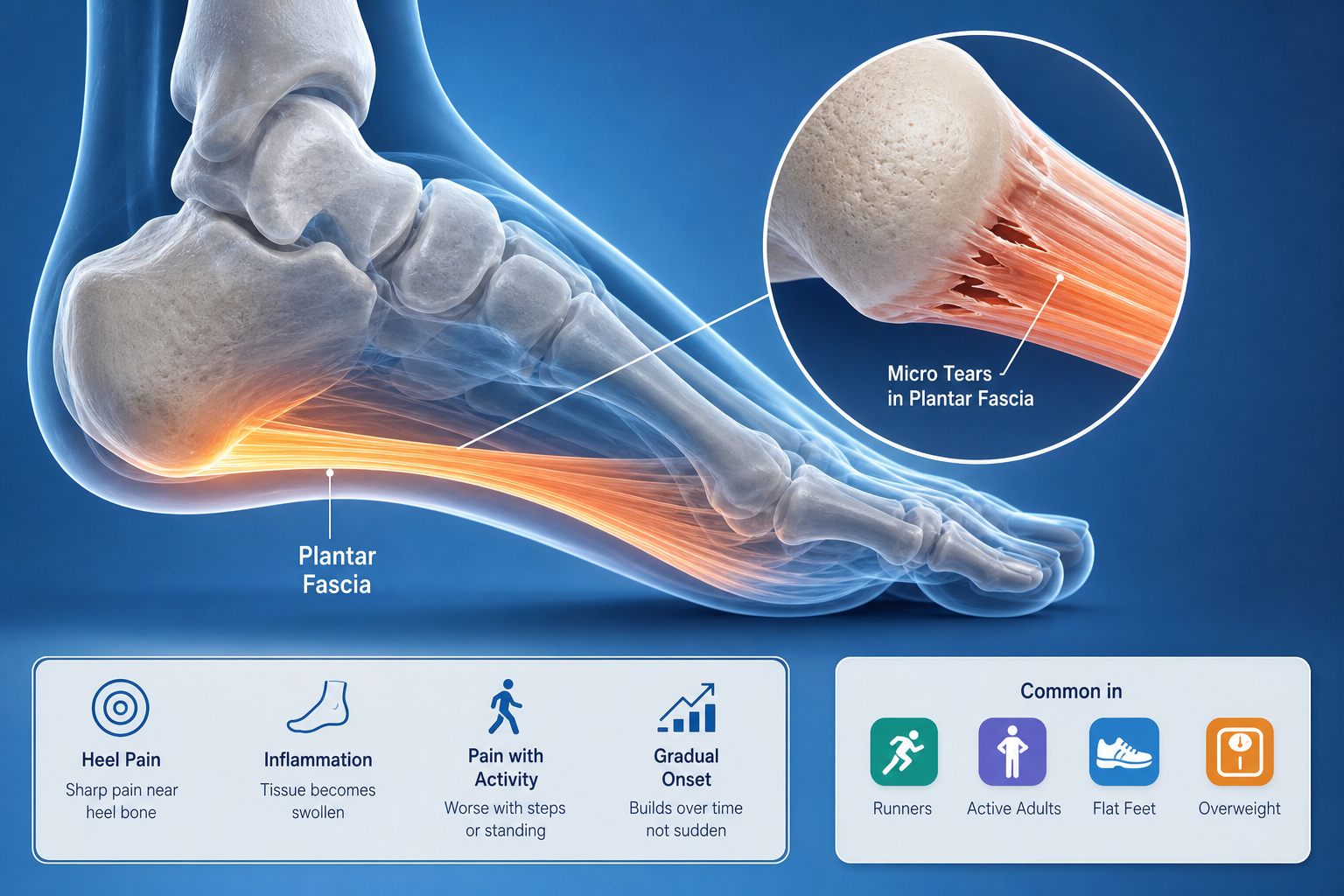
Plantar fasciitis is one of the most common causes of heel pain. Mayo Clinic says treatment may include stretching, activity modification, supportive shoes, and off-the-shelf or custom-fitted arch supports to distribute pressure more evenly.
For people dealing with plantar fasciitis-related discomfort, firmer arch support may help reduce strain through the arch and heel while worn. Learn more in our guide to the best insoles for plantar fasciitis.
Flat feet and overpronation
Flat feet can be painless for many people, but when symptoms appear, support can matter. Mayo Clinic notes that arch supports do not cure flatfeet, but they often reduce symptoms. That is the right way to think about insoles: they support the foot while worn, but they do not permanently rebuild the arch.
If you have low arches or feel your feet rolling inward, a more structured insole may help create a more stable foundation. See our guide to the best insoles for flat feet.
High arches and supination
People with high arches often need a different kind of support. Instead of lifting a low arch, the goal is often to fill the gap between the foot and the support surface so pressure is not concentrated only on the heel and forefoot.
A custom-molded insole may help reduce that gap because it forms closer to the shape of your actual foot.
Ball-of-foot pressure
Some people feel pressure near the ball of the foot, especially during long periods of standing or walking. In those cases, the goal is often to distribute pressure more evenly and reduce overload in one area. If pain is sharp, burning, worsening, or persistent, speak with a medical professional.
Where Contour fits in
Contour Custom Pro was designed for people who want more personalization than generic OTC inserts, without waiting weeks for a traditional lab-made orthotic.
The product uses a water-activated molding process inside your own shoes. You inject water into the insole, place it in your shoe, and walk while the support surface shapes under your body weight. The goal is to capture how your foot behaves under real load, not just how it looks in a static impression.
Contour Custom Pro is built around:
- Water-activated molding: Designed to shape inside your shoe in about 15 minutes.
- Firm arch support: Designed to hold structure under body weight.
- Heel stability: Designed to help the foot sit more securely inside the shoe.
- Durable materials: Built for long-term support instead of temporary foam cushioning.
Contour is not a replacement for medical care in complex cases, but it can be a practical middle-ground option for people who want custom-molded support without the traditional clinic process.
When to see a podiatrist
At-home support can be helpful for many people, but there are situations where a podiatrist or medical professional is the better next step.
Speak with a medical professional if you have:
- Severe or worsening foot pain
- Pain that prevents normal walking
- Numbness, tingling, burning, or loss of sensation
- Diabetes, neuropathy, ulcers, or open wounds
- Recent foot or ankle surgery
- Major swelling, bruising, or visible deformity
- A rigid flatfoot that does not change when sitting or standing
- Pain that does not improve with conservative care
This article is for educational purposes only and is not a substitute for medical advice, diagnosis, or treatment.
How to choose the right foot support
The right insole depends on your foot shape, shoes, symptoms, and how you spend your day.
- If you mostly want step-in comfort: A basic cushioned insole may be enough.
- If you stand all day: Look for support that holds shape under body weight, not just soft foam.
- If you have flat feet: Look for arch support that feels stable without forcing the foot into an uncomfortable position.
- If you have high arches: Look for support that reduces gaps under the arch and helps distribute pressure.
- If you have persistent pain: Talk to a podiatrist, especially if symptoms are severe or worsening.
For many people, the goal is simple: choose a support surface that matches your foot better, holds its shape longer, and fits the shoes you actually wear.
Ready to try custom-molded support?
Contour Custom Pro molds inside your own shoe in about 15 minutes, helping create a personalized foundation for everyday movement.
Frequently Asked Questions
How do I choose the right insole for my arch type?
Start by identifying whether you have low, neutral, or high arches. Low arches often need stable arch support that does not feel too aggressive. High arches often need support that fills the arch gap and helps distribute pressure. If you are unsure, a custom-molded option can help reduce the guesswork.
Are prescription orthotics better than at-home custom insoles?
Prescription orthotics can be the right choice for complex medical issues, severe deformities, or symptoms that require professional oversight. At-home custom-molded insoles can be a practical option for people who want more personalization than generic OTC inserts without the traditional clinic and lab process.
Can insoles help with plantar fasciitis?
Insoles do not cure plantar fasciitis, but arch support may help distribute pressure and reduce strain for some people. If heel pain is severe, worsening, or not improving, speak with a medical professional.
How often should I replace my insoles?
It depends on the material, your activity level, body weight, shoes, and how often you wear them. Soft foam may compress faster, while firmer structural support is designed to hold its shape longer.
Do I need different insoles for running, walking, and standing?
Sometimes. Running, walking, standing, work boots, and dress shoes all place different demands on your feet and shoes. The best insole is the one that fits your foot, your shoe, and your daily use.
Are firm insoles uncomfortable?
Not necessarily. Firm support may feel different at first, especially if you are used to soft foam. The goal is not to make the insole painfully hard. The goal is to create structure that supports the foot while still allowing comfortable movement.