

Overpronation insoles: How to support feet that roll inward in 2026

If you’ve ever noticed your shoes wearing down faster on the inside edge, or your feet feel tired and achy after a long day, you may be dealing with a common movement pattern called overpronation.
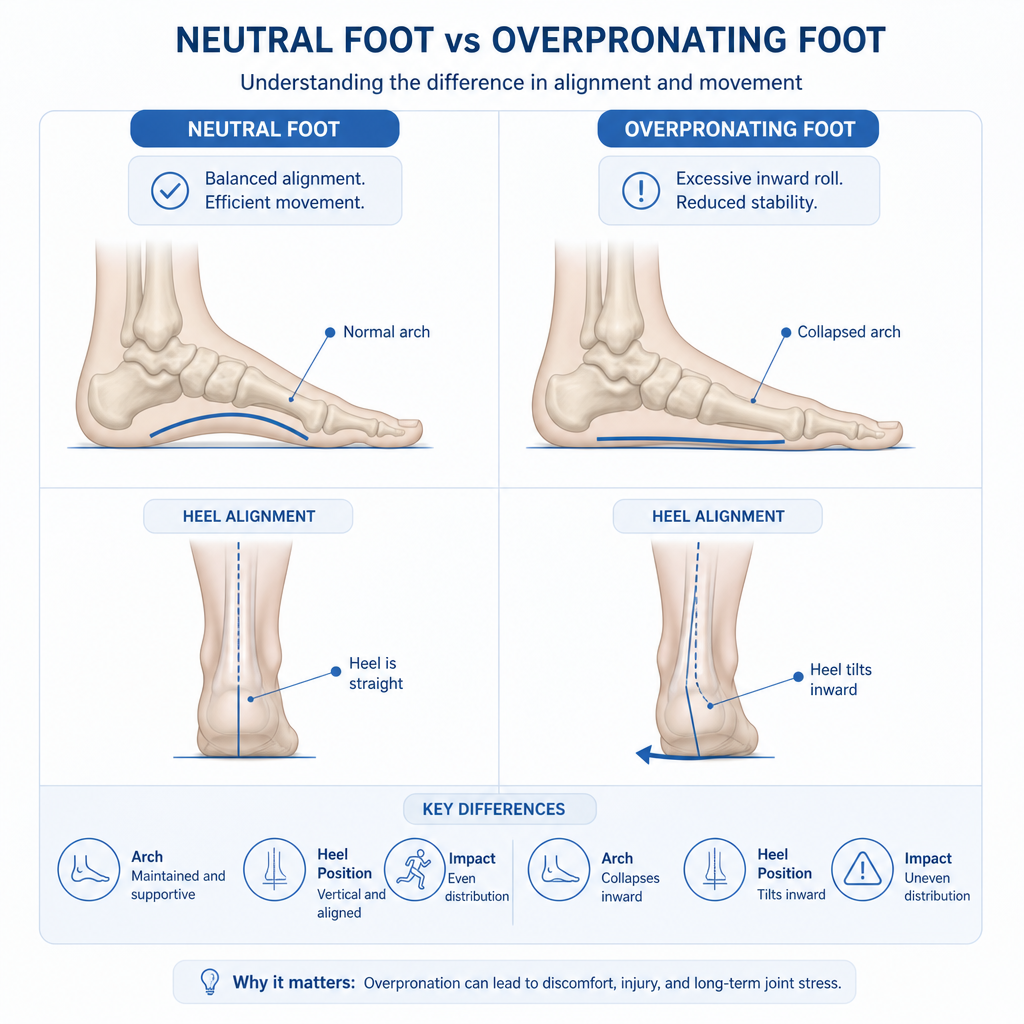
Overpronation happens when the foot rolls inward more than expected during walking or running. That movement can affect how pressure travels through the arch, ankle, knee, hip, and lower back.
In this guide, we’ll break down what overpronation is, why it often shows up alongside flat feet, and what to look for in insoles designed to support feet that roll inward.
What is overpronation?
Overpronation describes how your foot moves when you walk or run. A small amount of inward rolling is normal because it helps the foot absorb impact. Overpronation means the foot rolls inward too far, which can place extra strain on the muscles, tendons, and ligaments that support the arch.
Cleveland Clinic explains that overpronation happens when your gait causes the arches of your feet to flatten more than they normally would. They also note that orthotic inserts can help support the arches. For people dealing with ongoing discomfort, this is why structure matters more than just soft cushioning.
How overpronation can feel
Some people overpronate without noticeable symptoms. Others start to feel discomfort as the foot and lower body work harder to stay stable.
Common signs may include:
- Inside-edge shoe wear: The inner side of the sole wears down faster than the outer side.
- Arch or heel discomfort: The middle of the foot or heel may feel tired, sore, or strained after standing or walking.
- Inner ankle tenderness: Some people feel irritation around the inside of the ankle.
- Foot fatigue: Your feet may feel heavy, weak, or less stable during long days or activity.
- Knee, hip, or back discomfort: Because the feet are the foundation for movement, changes at the foot can affect how pressure moves up the body.
These symptoms can have many causes, so overpronation should not be self-diagnosed as the only explanation. If pain is severe, worsening, or persistent, speak with a healthcare professional.
Flat feet and overpronation
Flat feet and overpronation are related, but they are not exactly the same thing.
- Flat feet describe foot structure. The arch is low or not visible when standing.
- Overpronation describes movement. The foot rolls inward during walking or running.
Mayo Clinic explains that flatfeet happen when the arches flatten when weight is placed on them. Many people with flat feet have no symptoms, but some experience discomfort or alignment-related strain. Flat feet can make overpronation more likely because there is less arch structure resisting the inward roll.
If you think flat feet are part of the issue, read our guide to the best insoles for flat feet.
Why soft insoles are usually not enough
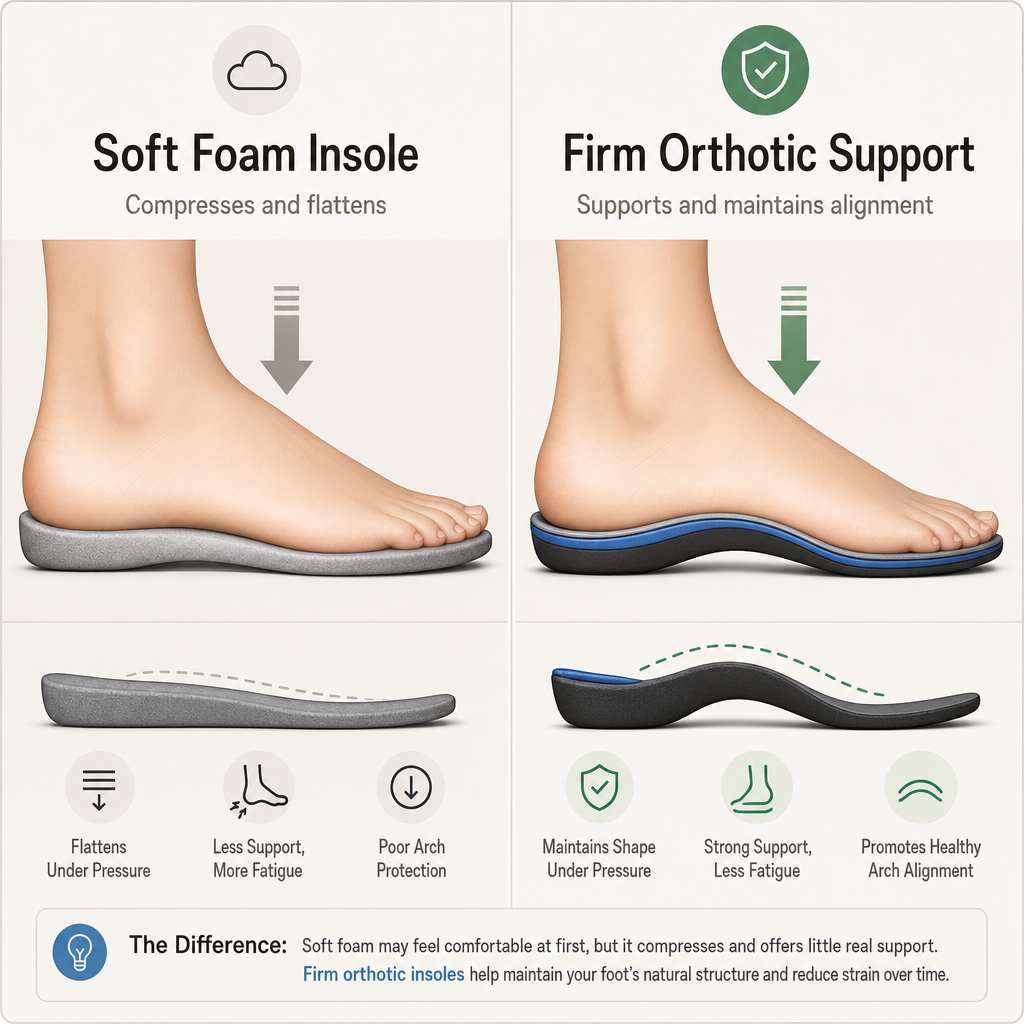
When your feet hurt, it makes sense to reach for something soft. Foam and gel insoles can feel comfortable at first, but if they compress under body weight, they may not provide enough structure for feet that roll inward.
Overpronation is a movement and support issue. That means the insole needs to do more than cushion the foot. It should help support the arch, stabilize the heel, and hold its shape through repeated steps.
This does not mean an insole should feel painfully hard. The goal is a support surface that feels stable, not a soft insert that collapses by the end of the day.
What to look for in overpronation insoles
If you are searching for overpronation insoles, focus on support features instead of just thickness or softness.
Firm arch support
The arch support should be firm enough to resist collapsing under body weight. This helps create a more stable foundation while standing, walking, or running.
Deep heel cup
The heel is the anchor of the foot. A deeper heel cup can help the heel sit more securely inside the shoe, which may reduce unnecessary side-to-side movement and make the arch support feel more stable.
Durability
Overpronation can place repeated pressure on the insole. Look for materials designed to hold their shape instead of flattening quickly after a few weeks of wear.
Fit inside your actual shoes
The best insole is not just the one with the most support. It also needs to fit your shoes correctly. If it crowds the toe box or lifts your heel too high, it may create new discomfort.
OTC vs. custom-molded support
There are two main routes when choosing support for overpronation: pre-made over-the-counter insoles or custom-molded support.
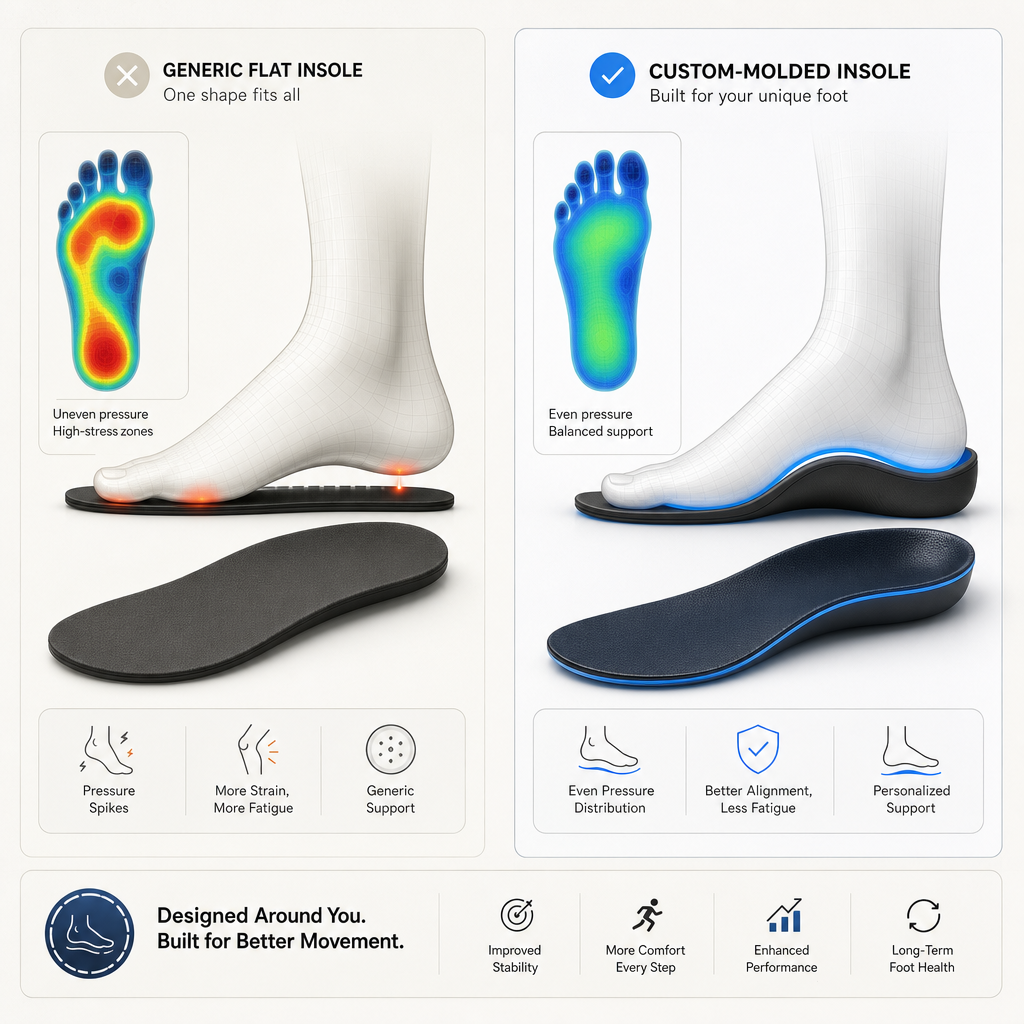
- Over-the-counter insoles: These are pre-made and widely available. They can be helpful for basic comfort or mild support needs, but they rely on a standard arch shape.
- Custom-molded support: These insoles are shaped around your specific foot. They may be useful if generic arch shapes feel uncomfortable, leave gaps, or do not support your foot evenly.
Custom-molded insoles can be especially helpful for people who struggle with generic arch shapes because they can reduce gaps between the foot and the support surface. The right choice depends on your foot shape, symptoms, shoes, activity level, and whether you need medical oversight.
For a deeper breakdown, see our guide to custom orthotics vs. insoles.
Where Contour fits in
Contour Custom Pro was designed for people who want more personalization than generic inserts, without the traditional clinic and lab process.
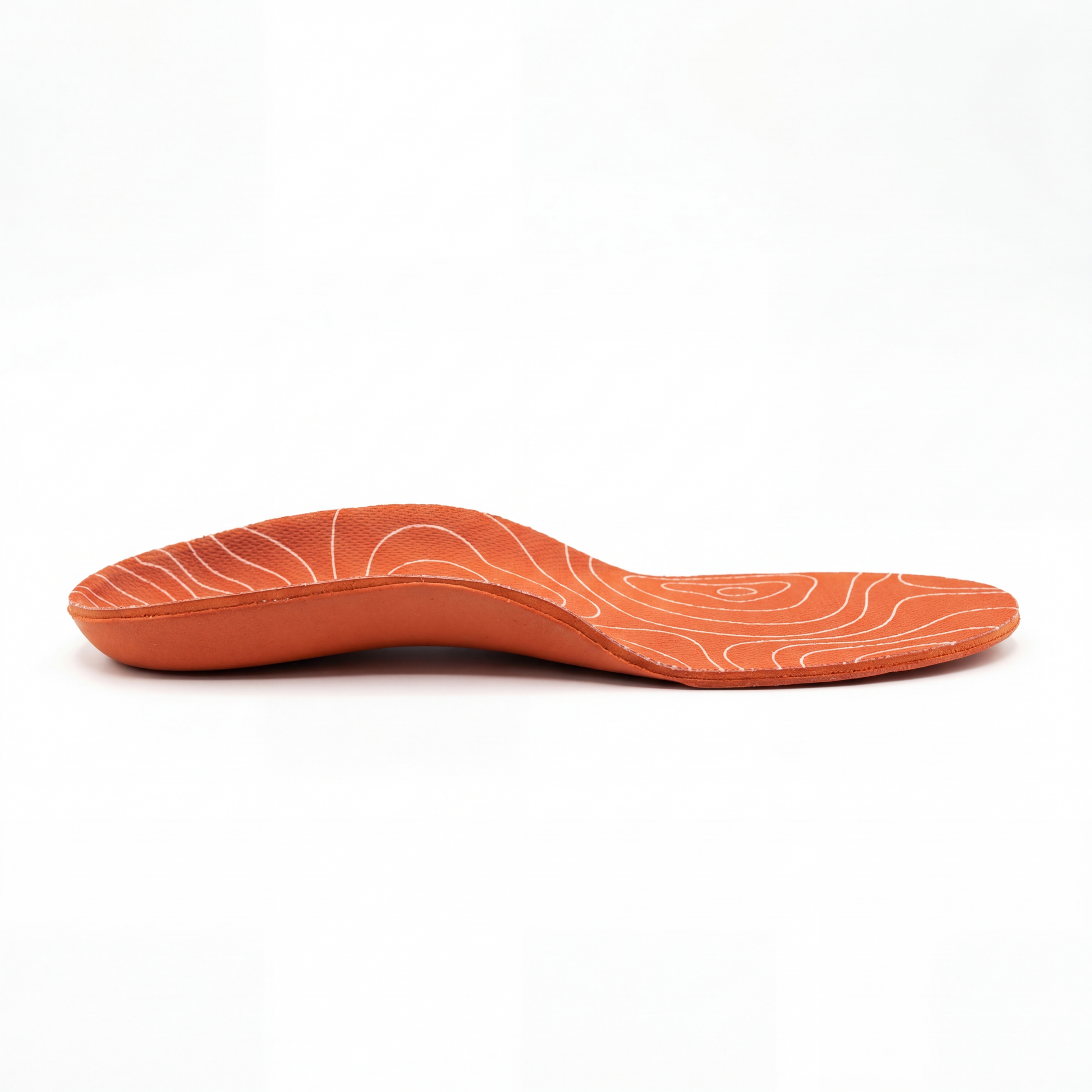
Unlike standard pre-shaped insoles, Contour uses a water-activated molding process. You inject water into the insole, place it inside your own shoe, and walk. As you move, the support surface molds under your body weight to capture a more personalized shape.
Within about 15 minutes, the material sets into a firmer custom-molded support surface. For people with feet that roll inward, this kind of support is designed to help create a more stable foundation while worn.
Contour may be a practical option if you want more support than soft foam inserts and a more personalized fit than standard OTC insoles.
When to see a podiatrist
Supportive insoles can help many people feel more stable and comfortable, but they are not a replacement for medical care. Cleveland Clinic recommends seeing a healthcare provider any time you have persistent foot, ankle, or leg pain that does not go away after rest.
You should speak with a podiatrist or healthcare professional if:
- You experience severe, sudden, or worsening foot pain.
- Your symptoms continue despite supportive shoes or insoles.
- You have diabetes, neuropathy, ulcers, or open wounds.
- You notice significant swelling, redness, numbness, or tingling.
- You recently had foot or ankle surgery.
- You have trouble walking normally.
This article is for educational purposes only and is not a substitute for medical advice, diagnosis, or treatment.
Try Contour Custom Pro
Contour Custom Pro is designed to support your arch, stabilize your heel, and create a personalized foundation inside your own shoes. It is built for people who want more structure than soft foam and more personalization than generic inserts.
Ready to try custom-molded support?
Contour Custom Pro molds inside your own shoe in about 15 minutes, helping create a firmer, more personalized support surface for everyday movement.
Frequently Asked Questions
What are the best insoles for overpronation?
The best insoles for overpronation usually include firm arch support, a stable heel cup, durable materials, and a shape that fits your foot and shoe well. A custom-molded option may be helpful if generic arch shapes do not feel supportive enough.
Can insoles fix overpronation?
Insoles do not permanently fix overpronation, but supportive insoles can help support the foot while worn and may help improve comfort for some people.
Are flat feet and overpronation the same thing?
No. Flat feet describe the structure of the foot, while overpronation describes how the foot moves during walking or running. They often overlap, but they are not the same thing.
Should overpronation insoles be soft or firm?
For overpronation, firmness usually matters more than softness. Soft foam can feel good at first, but firmer support is more likely to hold its shape under body weight.
When should I see a podiatrist for overpronation?
See a podiatrist if you have severe pain, persistent pain after rest, numbness, swelling, diabetes, neuropathy, recent surgery, or trouble walking normally.