
Best Insoles for Flat Feet: What to Look For in 2026
Most flat-foot insoles promise soft, cloud-like comfort. But if you have flat feet or fallen arches, softness alone usually is not enough. A soft insert may feel good at first, but if it collapses under pressure, it cannot give your arch the structure it needs.
The quest for the right insole usually starts in the drugstore aisle, surrounded by gel pads and foam inserts promising instant comfort. But if you have spent a full shift on your feet or finished a long walk with aching arches, you already know the truth: softness is not the same as support.
For flat feet, the goal is not to cushion the foot into collapse. The goal is to create a stable foundation that helps support the arch, reduce unnecessary strain, and improve comfort during real movement.
In this guide, we’ll break down what actually matters when shopping for insoles for flat feet, including arch support, heel stability, firmness, overpronation support, and when it makes sense to see a podiatrist.
Understanding flat feet and fallen arches
Flat feet, also called flatfoot or pes planus, happen when the arches on the inside of the feet flatten when weight is placed on them. When someone with flat feet stands, more of the sole may touch the floor compared with a typical arch.
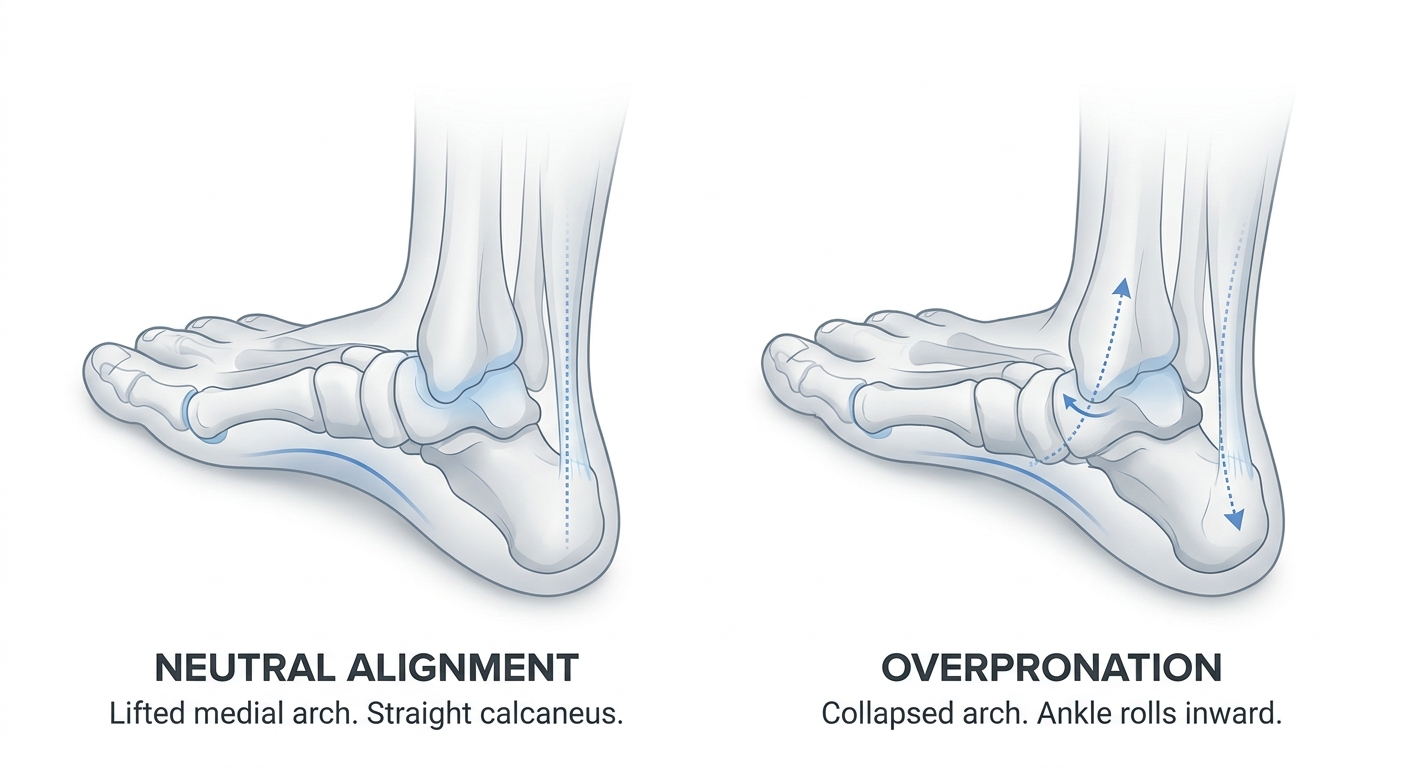
Some people are born with flatter arches. Others develop fallen arches later in life due to injury, repetitive strain, aging, or changes in the tendons that support the arch. Flat feet can be painless for many people, but they can also contribute to discomfort in the arch, heel, ankle, knees, hips, or lower back when the foot lacks enough support.
One simple way to understand your arch type is the “wet foot test.” Wet your foot, step onto a dark surface or piece of paper, and look at the shape of your footprint. If you see most of the bottom of your foot with little to no curve along the inside edge, you may have flat feet.
It is also helpful to know whether your flat feet are flexible or rigid. If an arch appears when you sit or stand on your toes but disappears when you stand normally, that is often considered flexible flatfoot. If the arch is absent whether you are sitting, standing, or on your toes, that may be more rigid and should be evaluated by a professional if it causes pain.
Why firm support beats soft cushioning for flat feet
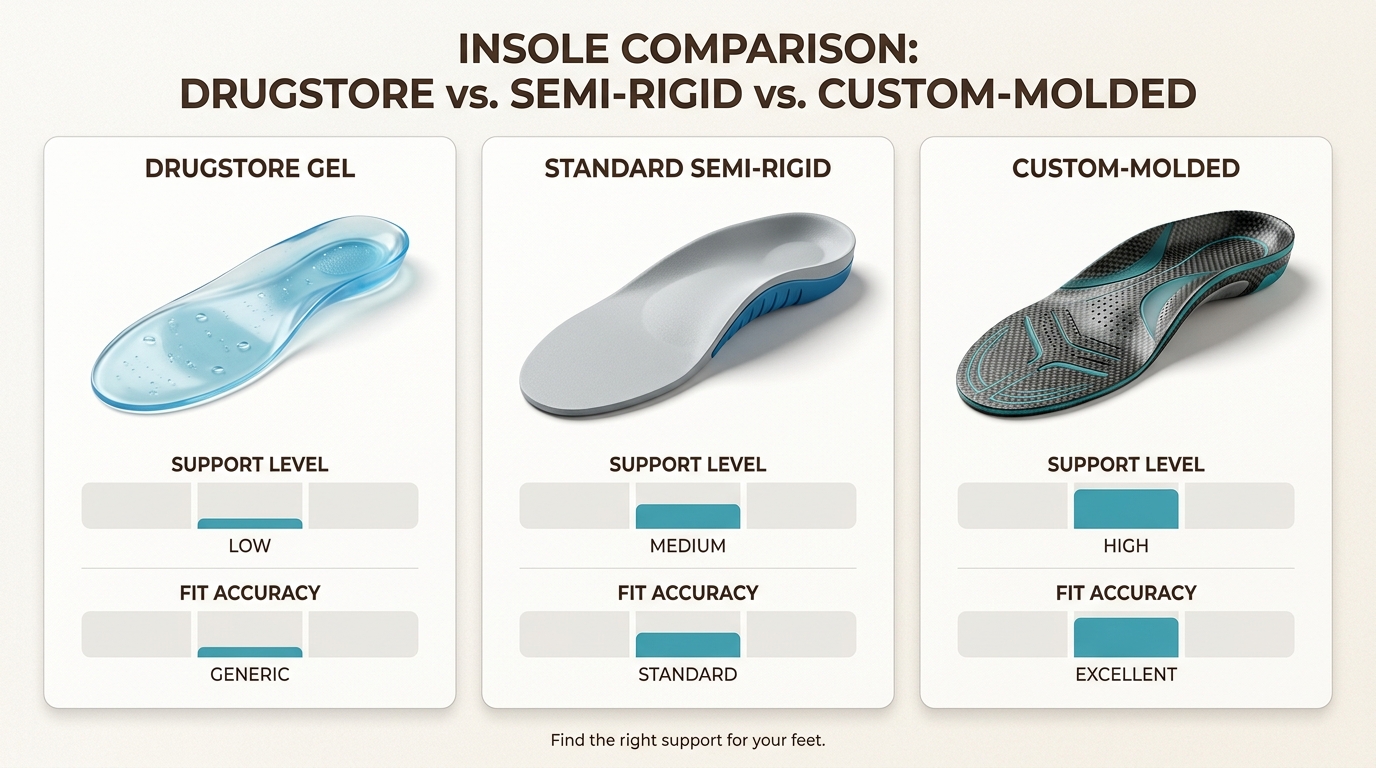
The biggest mistake people make is assuming the softest insole is the best insole. Soft foam can feel comfortable for the first few minutes, but if it compresses under your body weight, it may not provide meaningful support.
For flat feet, the issue is often excessive inward rolling, also called overpronation. When the arch drops too far, the foot can roll inward, changing how pressure moves through the foot and up the leg. A more structured insole can help create a stable base and support a more comfortable walking pattern.
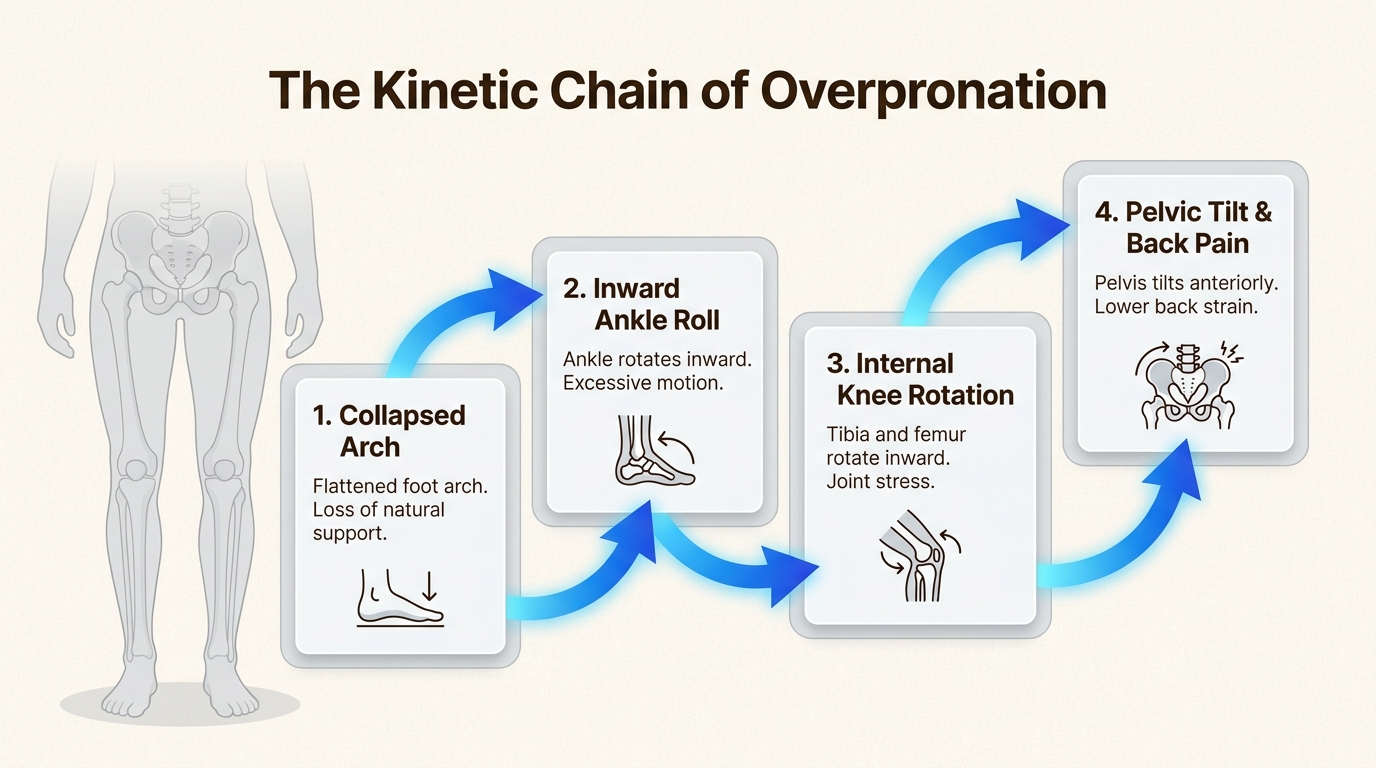
This is where firmness matters. A firm or semi-rigid support can help hold its shape under load. That does not mean the insole should feel painfully hard. It means the support structure should resist collapsing the moment you stand on it.
If you want a deeper comparison of support types, see our guide to custom orthotics vs. insoles.
What to look for in a flat-foot insole
When evaluating insoles for flat feet, focus on the features that actually affect support, not just the ones that sound comfortable in marketing copy.
Arch support that matches your foot
A generic “high arch” insole may feel like a lump under the foot if you have low arches. A flat-foot insole should support the arch without forcing it into an uncomfortable position. The best option is often a low-arch design or a custom-molded insole that adapts to your actual foot shape.
Deep heel cup
The heel cup helps anchor the back of the foot. A stable heel cup can help reduce side-to-side movement and improve how the foot sits inside the shoe. This matters because heel stability can influence how the arch and ankle move during walking.
Firm structure
Soft foam can add comfort, but it usually does not create enough resistance for flat feet. Look for an insole with a firmer base, semi-rigid shell, or custom-molding system that can hold its shape under body weight.
Custom-molding capability
Custom-molded insoles can be especially useful because they are shaped around your actual foot instead of an average foot model. At-home molding options, like Contour’s HydroFit process, are designed to create a personalized fit without a traditional clinic appointment.
Popular insole options for flat feet: how they compare
There is no single “best” insole for every foot. The right choice depends on your arch shape, comfort preferences, activity level, budget, and whether your symptoms require medical oversight.
| Option | Support Style | Customization | Best For |
|---|---|---|---|
| Contour Custom Pro | Structured custom-molded support | Water-activated molding inside your shoe | People who want personalized support at home |
| PowerStep Pinnacle Low | Semi-rigid low-arch support | Pre-shaped | Low arches and mild to moderate support needs |
| Superfeet Run Cushion Low Arch | Performance support with cushioning | Trim-to-fit | Running and higher-impact activity |
| Dr. Scholl’s Stability Support | Budget stability support | Trim-to-fit | Casual daily use and budget testing |
| SOLE Performance | Moldable cork-based support | Heat or wear moldable | Eco-conscious buyers and firmer support |
| Tread Labs Pace | Firm arch shell with replaceable covers | Arch height selection | Long-term durability and replaceable top covers |
| Spenco Total Support Max | Firm motion-control support | Pre-shaped | Hiking, work boots, and heavier use |
1. Contour Custom Pro
Contour Custom Pro is an at-home custom-molded orthotic designed to shape inside your own shoes in about 15 minutes. It was created for people who want more personalized support than a generic insert, without going through the traditional clinic and lab process.
The process is simple: inject water into the molding core, place the insoles into your shoes, and walk for several minutes while the material shapes under your body weight. Because the molding happens while you are standing and moving, Contour is designed to capture how your foot behaves under real load.
Before Contour was available direct-to-consumer, the technology had been used by 350+ podiatrists across 20,000+ patients. Contour’s HydroFit process is designed to create a personalized, weight-bearing fit at home.
2. PowerStep Pinnacle Low
PowerStep is a well-known insole brand with several structured support options. The Pinnacle Low model is designed for lower arches and can be a useful option for people who want a pre-shaped support without custom molding.
Because it is not molded to your foot, the main limitation is fit personalization. It may work well for some low-arch users, but it will not account for the exact differences between your left and right foot.
3. Superfeet Run Cushion Low Arch
Superfeet offers several performance-focused insoles, including low-arch options for runners. This type of insole may be a good match for people who want a balance of stability and cushioning for higher-impact activity.
Because it is trim-to-fit rather than custom-molded, it is still built around a pre-designed support profile rather than your exact foot shape.
4. Dr. Scholl’s Stability Support
Dr. Scholl’s is one of the most recognizable foot-care brands. Their Stability Support insoles are a low-cost entry point for people who want more support than a basic foam insert.
This can be a reasonable starting point for mild symptoms or casual walking. For daily long-shift wear, heavier users, or recurring pain, the materials may not provide the same long-term structure as firmer or custom-molded options.
5. SOLE Performance
SOLE uses moldable materials, including recycled cork options, to create a firmer support that can shape with use. This can be a good fit for people who want a more natural-feeling support and prefer a sustainability-focused brand.
Heat-moldable or wear-moldable insoles can be more personalized than standard OTC inserts, though the fit process is still different from a water-activated in-shoe mold like Contour.
6. Tread Labs Pace
Tread Labs is known for durability and replaceable top covers. Their Pace insole uses a firm arch shell and comes in multiple arch heights, including lower arch options.
This can be a strong long-term option for people who wear through top covers quickly but want to keep the structural base.
7. Spenco Total Support Max
Spenco focuses on stability and motion control. Total Support Max may be a good fit for people who need firmer support for hiking, work boots, or uneven terrain.
Like other pre-shaped options, it may offer strong support but does not mold directly to your exact arch shape.
Choosing your match by activity
Even a well-made insole can feel wrong if it does not match your daily use. Here is how to think about your situation.
For standing all day
If you are a nurse, teacher, warehouse worker, hospitality professional, or anyone standing for long shifts, prioritize support that holds up under repeated loading. The goal is to reduce the feeling of collapse as the day goes on.
For running and sports
Look for a balance of stability and flexibility. A very rigid insole may feel harsh for some runners, while an overly soft insole may compress too much. Your best option depends on your gait, shoes, and comfort preferences.
For dress shoes
Space is the biggest issue. Many dress shoes have less room inside, so a lower-profile or 3/4-length insole may fit better. If your main shoes have removable factory insoles, you have more flexibility.
When to see a podiatrist
Flat feet are not always a problem. Many people have flat feet and no symptoms. But you should speak with a podiatrist or medical professional if you have:
- Severe or worsening pain
- Pain that limits your normal activities
- Swelling along the inside of the ankle
- Numbness, tingling, or burning
- Diabetes or neuropathy
- Recent foot or ankle surgery
- Active ulcers or wounds
- A rigid flatfoot that does not change when sitting or standing
This article is for education only and is not a replacement for medical advice, diagnosis, or treatment.
Start with support that actually fits
The science of foot support is simple: if your insole collapses under your body weight, it cannot do much to support your arch. For flat feet and fallen arches, the best insole is not necessarily the softest one. It is the one that provides the right shape, firmness, heel stability, and fit for your foot.
Contour Custom Pro was built for people who want more than temporary cushioning, but do not want to wait weeks for a lab-made orthotic. It molds inside your own shoes in about 15 minutes and is designed to create a personalized foundation for everyday movement.
Ready to try custom-molded support?
Contour Custom Pro molds inside your own shoe in about 15 minutes, helping create a personalized foundation for flat feet, fallen arches, and everyday support.
Frequently Asked Questions
What should I look for in insoles for flat feet?
Look for firm arch support, a stable heel cup, durable materials, and a fit that matches your arch height. Soft foam can feel comfortable at first, but it may not provide enough structure if it compresses under your weight.
Can insoles fix flat feet?
Insoles do not permanently rebuild or cure flat feet. However, supportive insoles may help reduce symptoms, improve comfort, and support better alignment while you wear them.
Are custom-molded insoles better than generic insoles for flat feet?
Custom-molded insoles can be a better option for some people because they adapt to the shape of the foot instead of forcing the foot onto a generic arch profile. The right choice depends on your symptoms, shoes, budget, and whether you need medical oversight.
Do I need a doctor to get insoles for flat feet?
Not always. Many people can try nonprescription arch supports first. But you should speak with a podiatrist if you have severe pain, diabetes, neuropathy, swelling, recent surgery, ulcers, or symptoms that limit your normal activities.
How long do insoles for flat feet usually last?
It depends on the materials, how often you wear them, your activity level, and your body weight. Soft foam inserts may compress quickly, while firmer or custom-molded options are designed to hold their shape longer.
Will insoles for flat feet fit in my existing shoes?
Most full-length insoles are designed to replace the removable factory liner inside your shoes. If your shoes are tight or do not have removable liners, you may need a lower-profile or 3/4-length option.