
Best Insoles for Plantar Fasciitis in 2026: What Actually Matters
About 1 in 10 people will deal with the stabbing heel pain of plantar fasciitis at some point. Most people instinctively reach for soft, pillowy insoles, but that often makes the problem worse. The difference between real relief and a wasted purchase usually comes down to one thing: structural firmness.
If you’ve ever felt that sharp sting in your heel when you take your first step out of bed, you know how it can change your whole day. You start avoiding long walks, skipping the gym, and constantly looking for a place to sit down. This constant mental energy spent managing pain — shifting your weight, icing your feet at night, and hoping the next drugstore insert will work — is exhausting.
The reality is that most off-the-shelf insoles are made for temporary comfort, not long-term support. In 2026, the technology has moved away from simple foam and gel toward clinical-grade customization you can do at home.
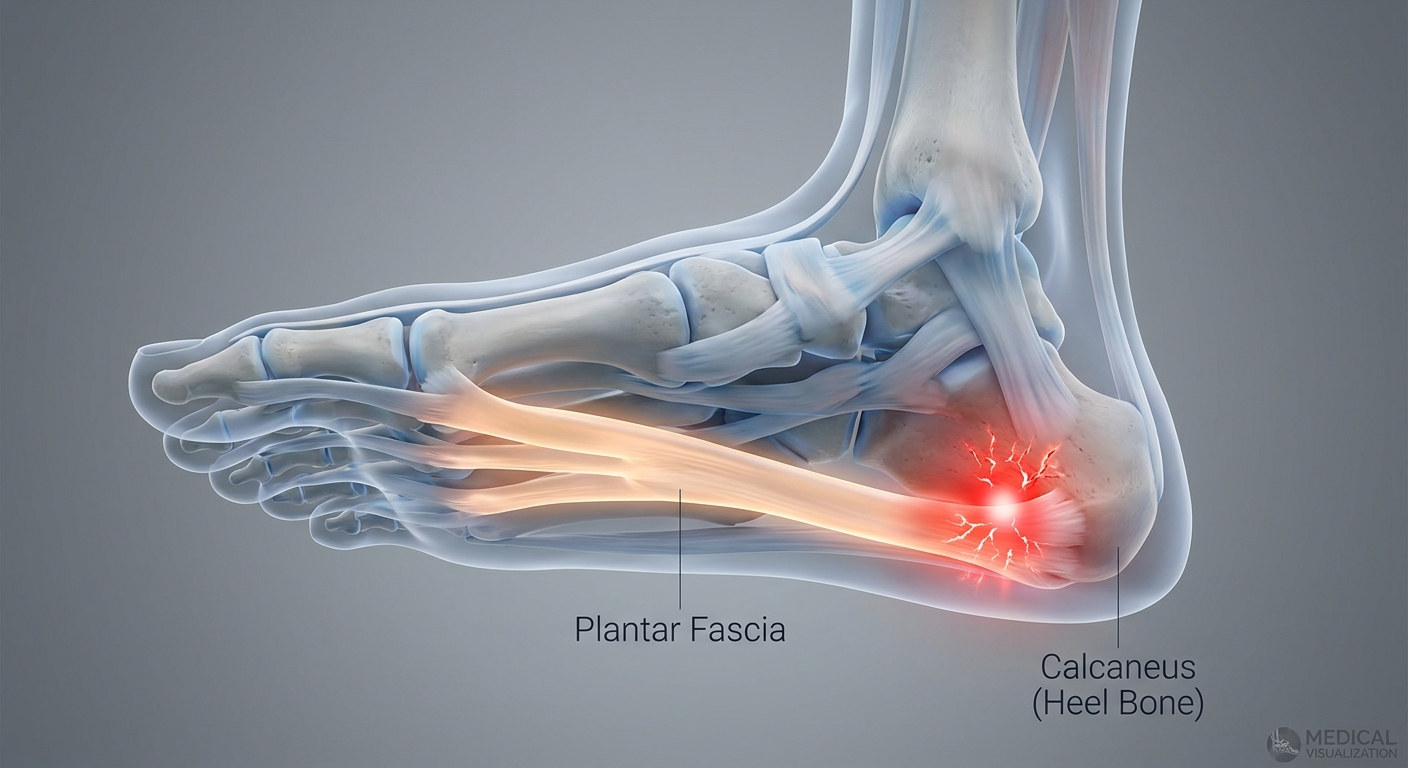
1. What is plantar fasciitis?
Plantar fasciitis is more than just sore feet. It’s the inflammation of the plantar fascia, a thick band of tissue that runs along the bottom of your foot, connecting your heel to your toes. This tissue acts as a shock absorber and supports your arch.
According to the Mayo Clinic, the issue is mechanical. When the fascia is under too much tension or repetitive stress, it develops tiny tears. If you keep straining it, the tissue can't heal, leading to chronic inflammation.
Common symptoms include:
- That first step: Sharp pain right after waking up.
- Pain after rest: Discomfort when standing up after sitting for a long time.
- The post-activity flare: Pain that gets worse after you stop moving.
If the problem is that the tissue is being overstretched, the solution has to be supporting the arch so the stretching stops.
2. Why firmness beats soft foam: The softness myth
When your feet hurt, you naturally want something soft. This leads many people into the "softness myth." You buy the most pillowy insoles you can find, and they feel great for the first few minutes. But once you start walking, that soft foam compresses under your weight. It loses its ability to actually support your foot.
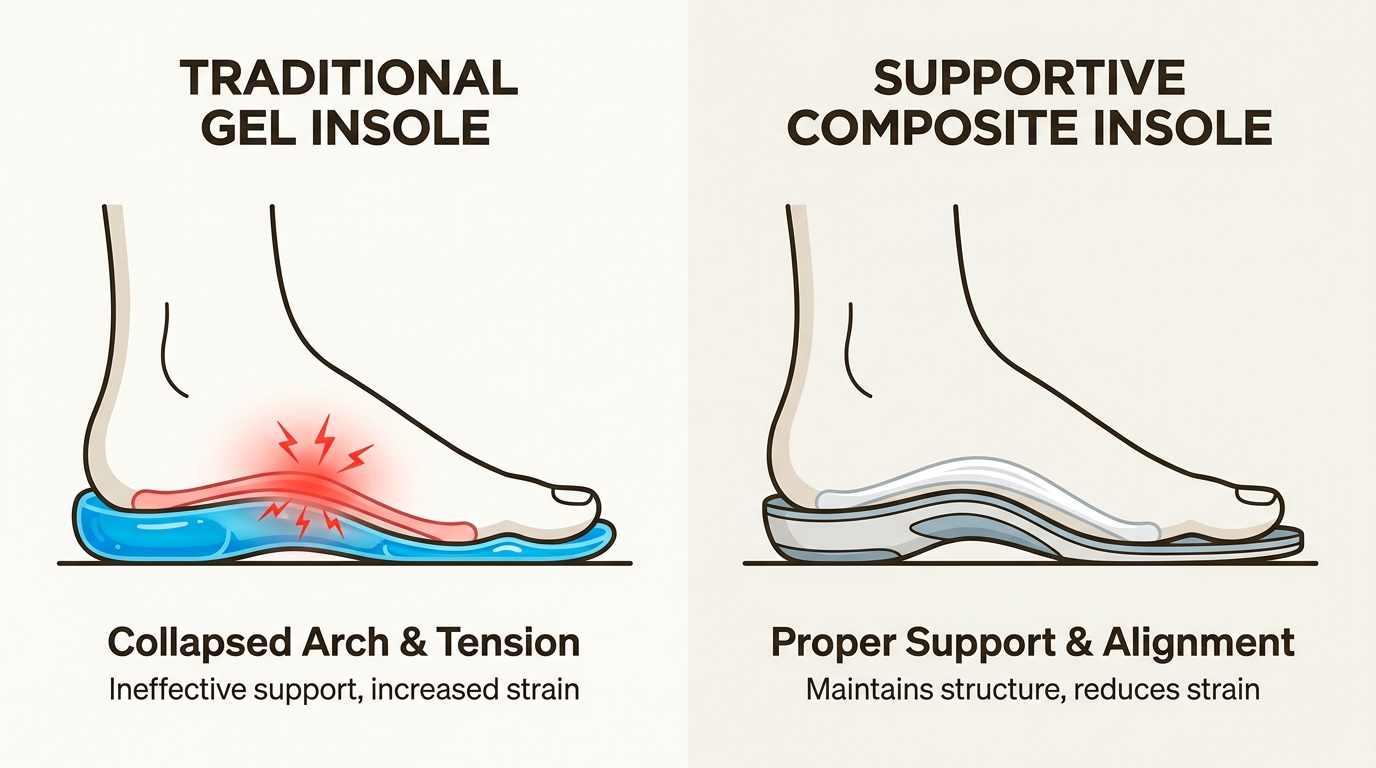
Medical experts point out that while soft gel or foam dampens the impact, it doesn't "offload" the fascia. If the material is too soft, your arch still collapses every time you take a step. This keeps pulling on the plantar fascia and prevents healing. This is why firmness is a clinical requirement for recovery.
Comfort vs. Correction
Real relief requires a distinction between "comfort" and "correction."
- Comfort is how the insole feels when you first put it on.
- Correction is how it changes your foot's mechanics over thousands of steps.
Correction requires structural firmness. A firm insole acts as a foundation for your arch, preventing it from dropping. This follows the Total Contact principle: the insole must fit your unique arch shape perfectly. If there is a gap, your foot will still flatten and stretch the fascia. Only a firm, custom-shaped surface can provide the resistance needed to let that tissue rest.
3. What to look for in a plantar fasciitis insole
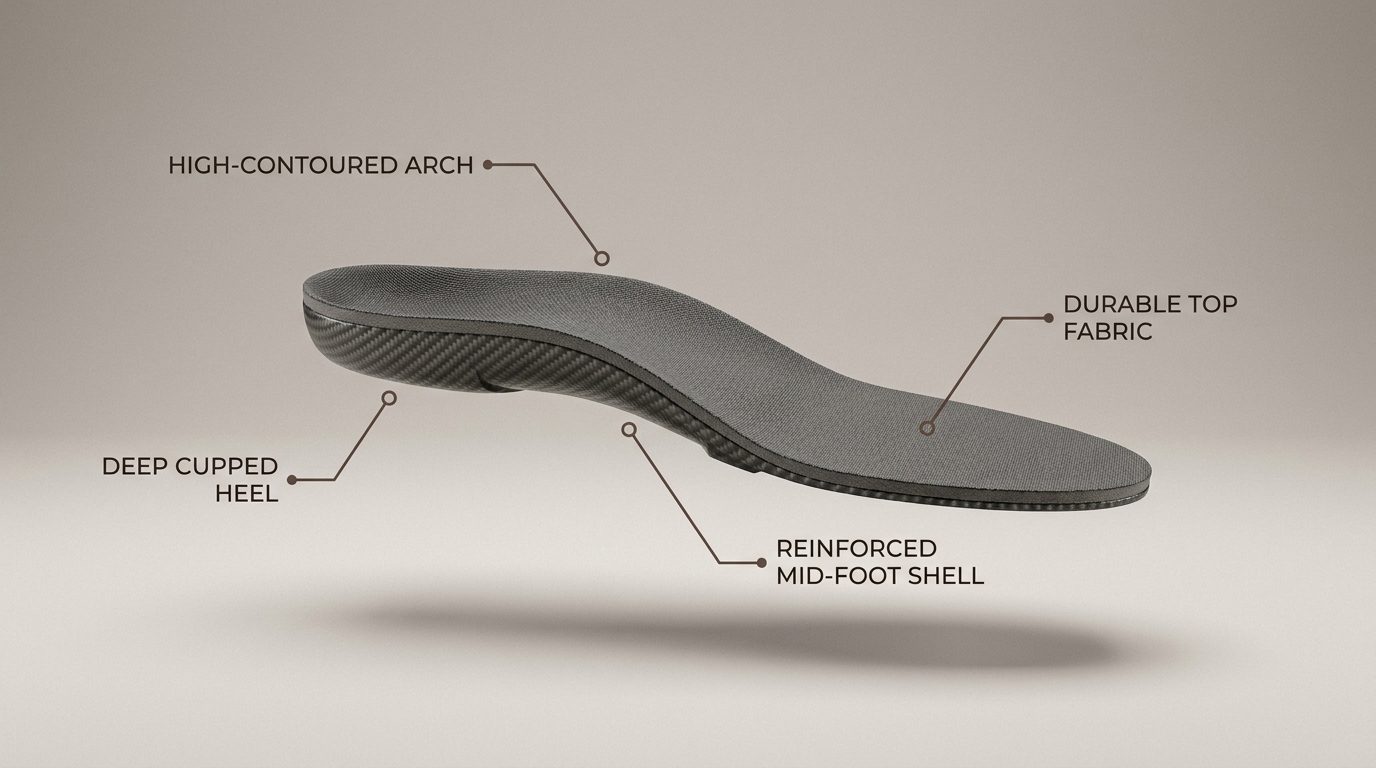
In 2026, the best insoles for plantar fasciitis are built on these four pillars:
Firm, structured support
The insole must have a semi-rigid core to limit excessive inward rolling, also known as pronation. Johns Hopkins Medicine notes that by supporting the arch and limiting this movement, you reduce the strain on the fascia.
Deep heel cup
Your heel has a natural fat pad for shock absorption. A deep heel cup cradles this fat pad, keeping it centered under your heel bone to maximize your body's natural cushioning.
Arch height specificity
"Medium" support is useless if you have high arches because it won't reach your foot. It can also feel like a lump if you have flat feet. The support has to match your specific contour. The best results come when the insole is molded directly to your footprint.
Durability
Cheap inserts made of basic foam often flatten out in weeks. Plantar fasciitis can take months to resolve, so you need high-performance materials that hold their shape for the long haul.
4. Custom orthotics vs. OTC insoles: The middle ground
Until recently, your options were limited. You could buy a $15 generic insert that did very little, or visit a podiatrist for $600 custom orthotics.
Clinical orthotics are effective but expensive and time-consuming. You need multiple appointments and wait weeks for a lab to make them. Generic off-the-shelf insoles are cheap but made for an "average" foot, which means they rarely fit anyone perfectly.
Comparing your options in 2026
| Type | Price | Customization | Speed | Best For |
|---|---|---|---|---|
| Generic OTC | $15 – $50 | None | Instant | Mild fatigue |
| Semi-Custom | $55 – $90 | Height options | Instant | Mild pain |
| DTC Custom | $59 – $189 | Home-molded | 15 mins | Chronic pain |
| Clinical | $400 – $700 | Lab-made | 2 – 4 weeks | Severe issues |
5. Top-rated insoles for plantar fasciitis in 2026
1. Contour Custom Pro
Where Contour fits in
Contour was founded after seeing how many people were stuck waiting for expensive clinical orthotics while their foot pain worsened. The goal was to take clinical-grade support and make it accessible at home.
The standout feature is HydroFit Technology. Unlike insoles that use heat or foam, this system uses a water-activated core. You inject water into the insole, place it in your shoe, and walk for 15 minutes. It captures your "weight-bearing geometry" — meaning it molds to your foot while you are actually standing and moving — ensuring a personalized fit under real-world load.
Data and validation
This isn't just a marketing claim. A study at the University of Tokyo compared Contour to traditional clinical orthotics. Using 3D motion analysis, researchers found that HydroFit technology provides similar biomechanical support patterns to custom-made medical orthotics. The study highlighted:
- Better pressure distribution: Confirming the arch is fully supported.
- Reduced heel pressure: Directly addressing the source of pain.
- Lateral stability: Helping with balance and alignment.

| Feature | Detail |
|---|---|
| Price | $150 |
| Molding | Water-activated, about 15 minutes |
| Guarantee | 60-Day Back On Your Feet Guarantee |
2. Tread Labs Pace 2
Tread Labs is known for long-term durability. Their "Pace" line is built for plantar fasciitis, featuring an extra-firm arch support.
They use a two-part system: a permanent molded arch support and replaceable top covers. This is a great "buy it for life" option. They offer four arch heights, from Low to Extra High, which covers most foot types well.
| Plan | Price | Arch Options | Guarantee |
|---|---|---|---|
| Pace 2 | $80 | 4 heights | Million Mile Arch Guarantee |
3. PowerStep Pinnacle
PowerStep is one of the most widely recommended brands by podiatrists for a non-custom solution. The Pinnacle line uses a patented semi-rigid shell that offers a good balance of support and cushioning.
While it isn't custom-molded, the static shape is well-engineered. It's a solid choice for those with mild pain who want something they can buy and wear immediately. However, since it isn't molded to your foot, it may not provide the "Total Contact" support needed for more chronic cases.
| Feature | Detail |
|---|---|
| Price | $54.95 |
| Material | Semi-rigid shell |
4. SOLE Active Medium
SOLE offers an interesting middle ground. Their insoles are made from recycled cork, making them a more sustainable choice.
The Active Medium is "wear-moldable," meaning it shapes to your feet as you wear them. You can also heat them in the oven to speed up the process. They are a reliable, eco-friendly option for personalized support.
| Feature | Detail |
|---|---|
| Price | $59 |
| Molding | Heat or wear-moldable |
6. When to see a doctor
While high-quality insoles like the Contour Custom Pro can help most cases of plantar fasciitis, they aren't a replacement for a medical diagnosis. You should see a podiatrist if:
- Pain is severe: If you can't put any weight on your foot.
- Numbness: This might suggest nerve issues rather than inflammation.
- Deformity: If your foot looks swollen, bruised, or out of shape.
For those with complex issues like severe rigid flatfoot or diabetic ulcers, a doctor can determine if you need a specialized clinical cast.
However, for most people, conservative care works. The Cleveland Clinic notes that stretching, physical therapy, and orthotics resolve about 90% of cases within 10 months.
7. A better foundation for your recovery
Plantar fasciitis pain is exhausting. It isn't just the physical sting; it's the mental load of wondering if you're making it worse with every step. You don't have to just "push through" it anymore.
Modern technology means you don't have to choose between cheap foam and $600 doctor visits. You can get a clinical-grade fit, backed by university research, delivered to your door.
We are so confident in our approach that we offer a 60-day "Back On Your Feet" guarantee. We want you to wear them, walk in them, and really test them. If you don't feel the difference that a custom-molded foundation makes, we'll help make it right.
Don't let foot pain limit what you can do. It's time to build a better foundation, one step at a time.
Ready to try custom-molded support?
Contour Custom Pro molds inside your own shoe in about 15 minutes, helping create a more personalized foundation for everyday movement.
Quick Links
Frequently Asked Questions
How do I find the best insoles for plantar fasciitis if I have high arches?
If you have high arches, look for an insole that offers total-contact support. Generic insoles often leave a gap under a high arch, which allows the plantar fascia to continue stretching. Custom-molded options like the Contour Custom Pro can help fill that gap by molding to your specific arch shape.
Are firm or soft insoles better for plantar fasciitis?
For plantar fasciitis, firm support is usually more important than soft cushioning. Soft insoles can feel good at first, but they often compress under body weight. A structured, semi-rigid foundation helps support the arch and reduce excessive stretching through the plantar fascia.
Can at-home custom insoles compare to a doctor's office orthotic?
At-home custom insoles can be a strong option for many people, especially when they mold under real body weight inside the shoe. Contour's HydroFit technology has been studied against traditional clinical orthotics and showed similar biomechanical support patterns in testing. For severe deformities, diabetic foot concerns, recent surgery, or complex medical issues, it is best to speak with a podiatrist.
How long does it take for insoles for plantar fasciitis to start working?
Some people notice more support quickly, but plantar fasciitis usually takes time to calm down. It can take several weeks of consistent wear, stretching, and load management for symptoms to improve. If pain is severe, worsening, or not improving, speak with a medical professional.
Will plantar fasciitis insoles fit in my existing work shoes?
Most quality orthotics are designed to replace the existing factory insole in your shoes. Contour is molded inside the shoes you wear, which helps create a more personalized fit between your foot, the insole, and the shoe.
What is the most important feature to look for in plantar fasciitis insoles?
The most important feature is arch support that holds its shape under load. If the arch support flattens as soon as you stand on it, it cannot do much to support the plantar fascia. Look for durable materials, a stable heel cup, and a structure that focuses on support rather than just adding cushion.